
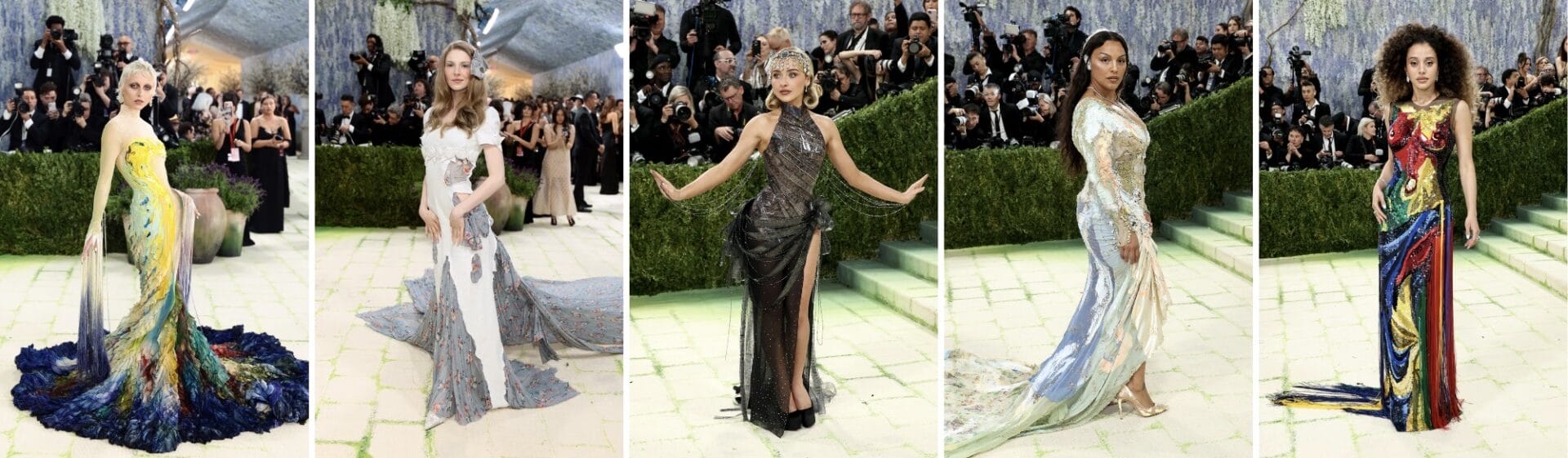
The Met Gala 2026 has always lived at the intersection of spectacle and storytelling, but this year’s theme, centered on the idea that fashion is art, felt especially clear. Rather than loosely interpreting it, a number of attendees treated the carpet like a canvas. The result was a night of looks that did not just reference art, but actually functioned as art objects in their own right. From hand-painted gowns to archival references and dramatic reveals, the strongest moments were the ones that were fully thought through.
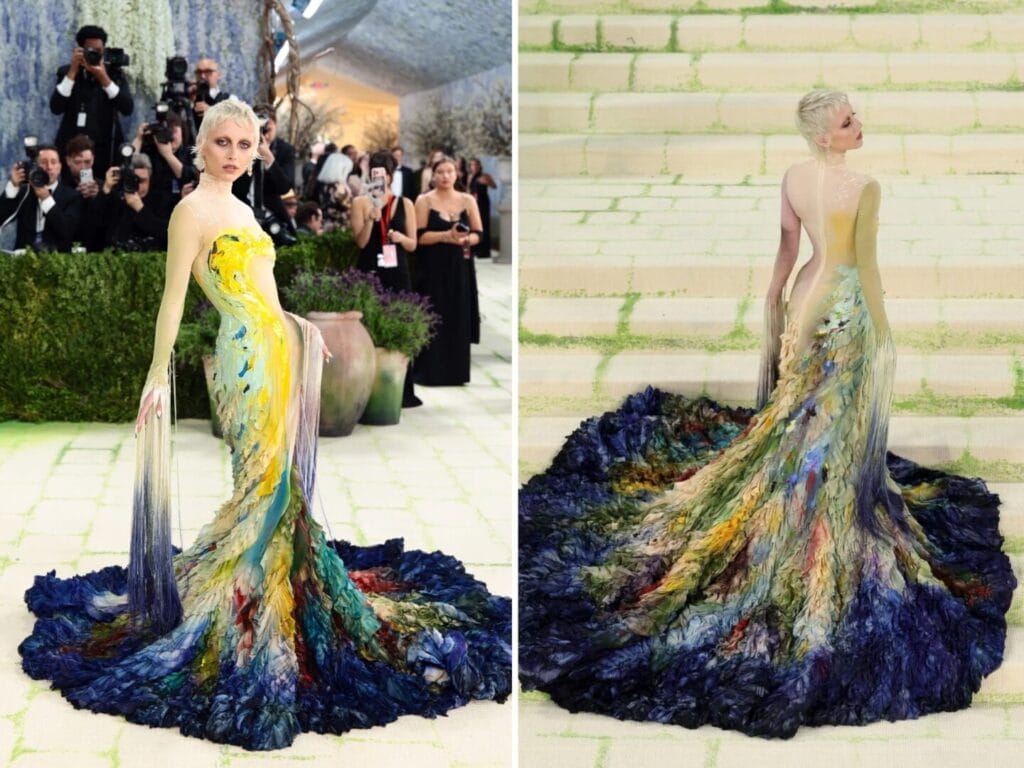
Leading the conversation was Emma Chamberlain, who arrived early and immediately set the tone. Wearing custom Mugler by Miguel Castro Freitas, her gown blurred the line between garment and painting in a way that felt intentional, not forced. The piece pulled directly from Vincent van Gogh, with visible references to his brushwork and color movement woven throughout the design. Chicago-based artist Anna Deller-Yee spent over 40 hours hand painting the dress using fine art materials, layering 30 distinct colors to create a textured, almost dimensional finish. It took four days to dry and four people to carry it up the steps, which you could actually feel when looking at it. In a night that leaned heavily maximal, this still stood apart. She did not just follow the theme, she fully understood it, and it showed.
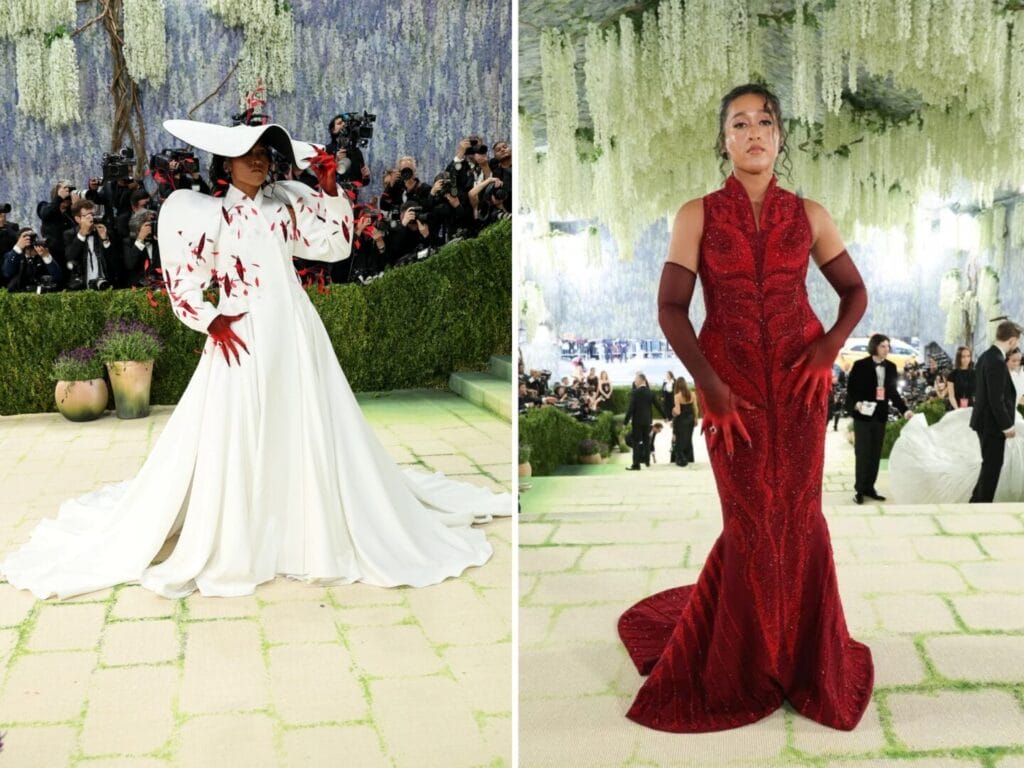
Reveals also played a major role, most notably in Naomi Osaka’s custom Robert Wun Couture look. She arrived in a sculptural white coat with red feather detailing before removing it on the steps to reveal a completely different red gown underneath. The dress itself featured around 659,000 hand placed Swarovski crystals and took over 3,280 hours to complete, which is kind of insane on its own. What made it land was the narrative behind it. Osaka described it as shedding skin, pulling from the human body and cycles of renewal. The switch could have easily felt gimmicky, but here it came across as deliberate, which made the whole moment much stronger.
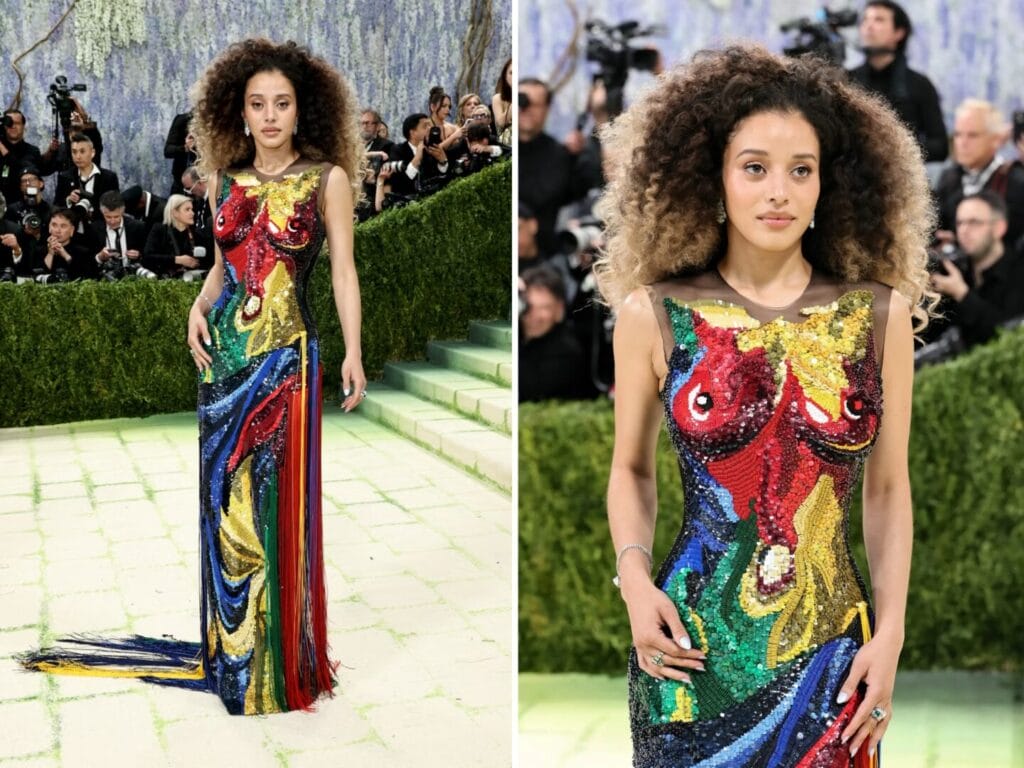
One of the more under-discussed standouts was Chase Infiniti in Thom Browne. Her sequined gown featured an abstract, swirling composition across the body, with reds, golds, blues, and greens coming together to evoke the female form. Constructed from over 1.5 million individual sequins, it had constant movement on the carpet, while a rainbow fringe train extended the visual even further. The artwork was quite literally on her body, and it read that way from every angle.
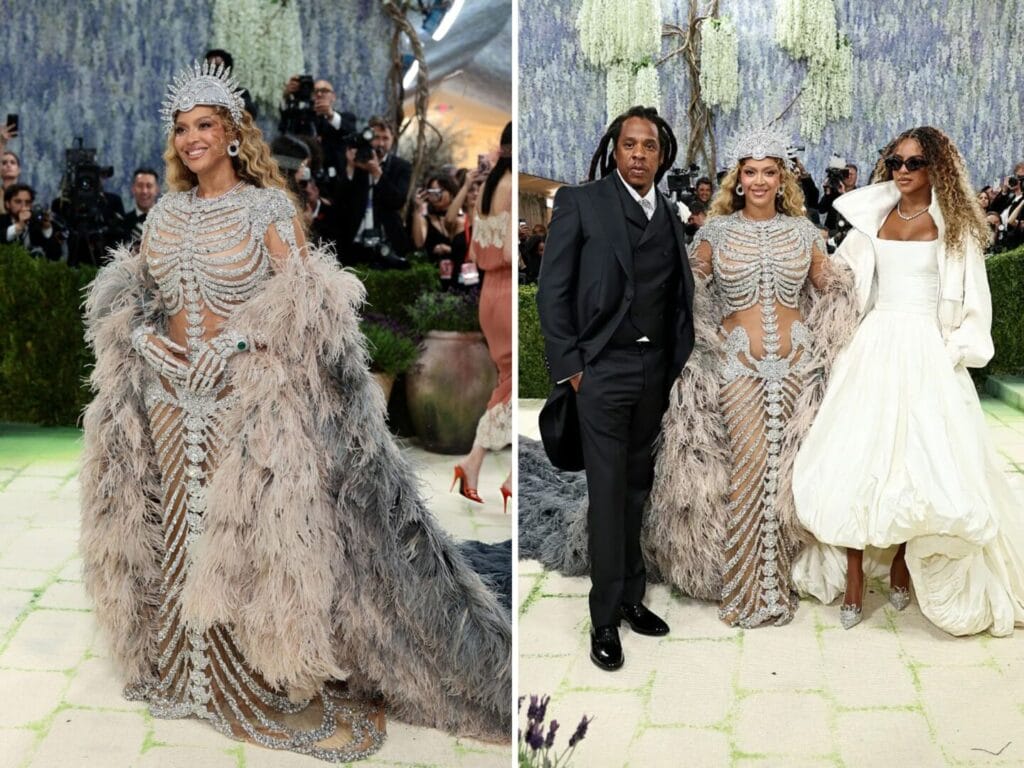
After a decade-long absence, Beyoncé returned to the Met steps in custom Olivier Rousteing. The collaboration made immediate sense given their history, and the result delivered. She wore a crystal skeleton gown layered under a feathered robe, finished with a diamond crown, dramatic but still controlled. Bringing Blue Ivy Carter alongside Jay-Z pushed it beyond just a red carpet appearance. It read as a full moment, exactly what you want from a return like this.
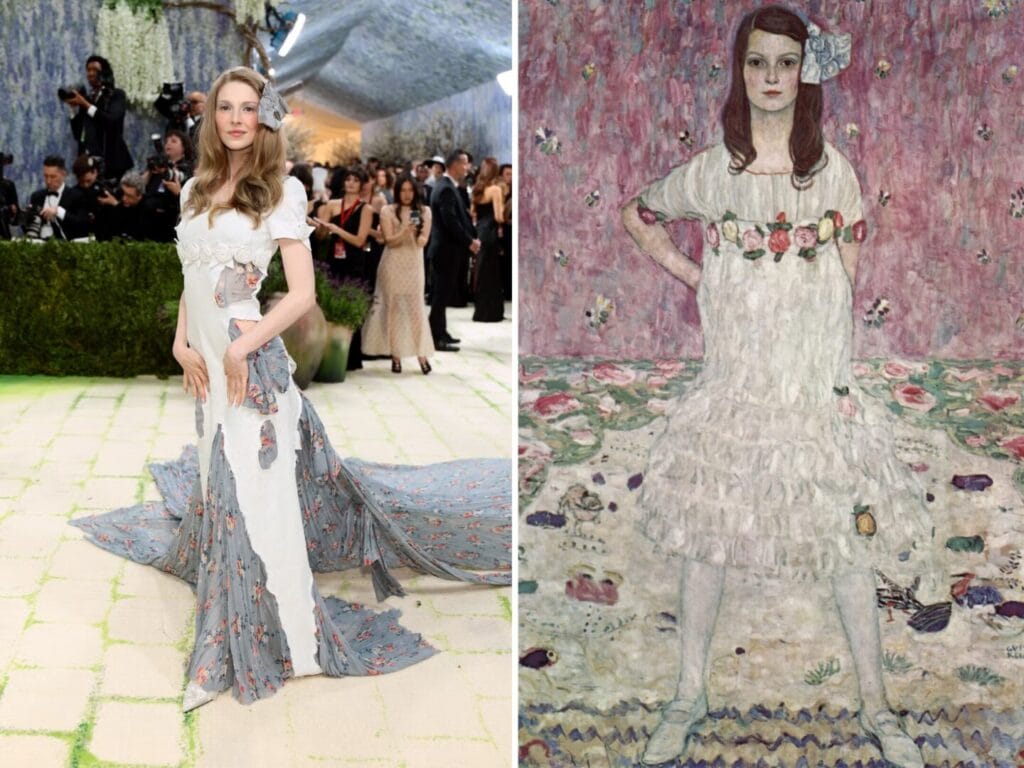
In contrast, Hunter Schafer took a much quieter approach in Prada. Her soft white gown was a near exact recreation of Portrait of Mäda Primavesi by Gustav Klimt, but more than that, she was essentially stepping into the role of the subject herself. The original painting depicts a young girl in a white dress surrounded by soft color and florals, and that same energy carried through here in the silhouette, the delicate detailing, and the overall softness. Prada translated it into something slightly more grown and modern, but the reference was still incredibly clear. While much of the carpet leaned into excess, this felt restrained in a way that made sense. Clean lines, soft texture, minimal styling. It did not need anything more. It was one of those looks you had to look at twice, and that subtle level of detail is exactly what made it so strong.
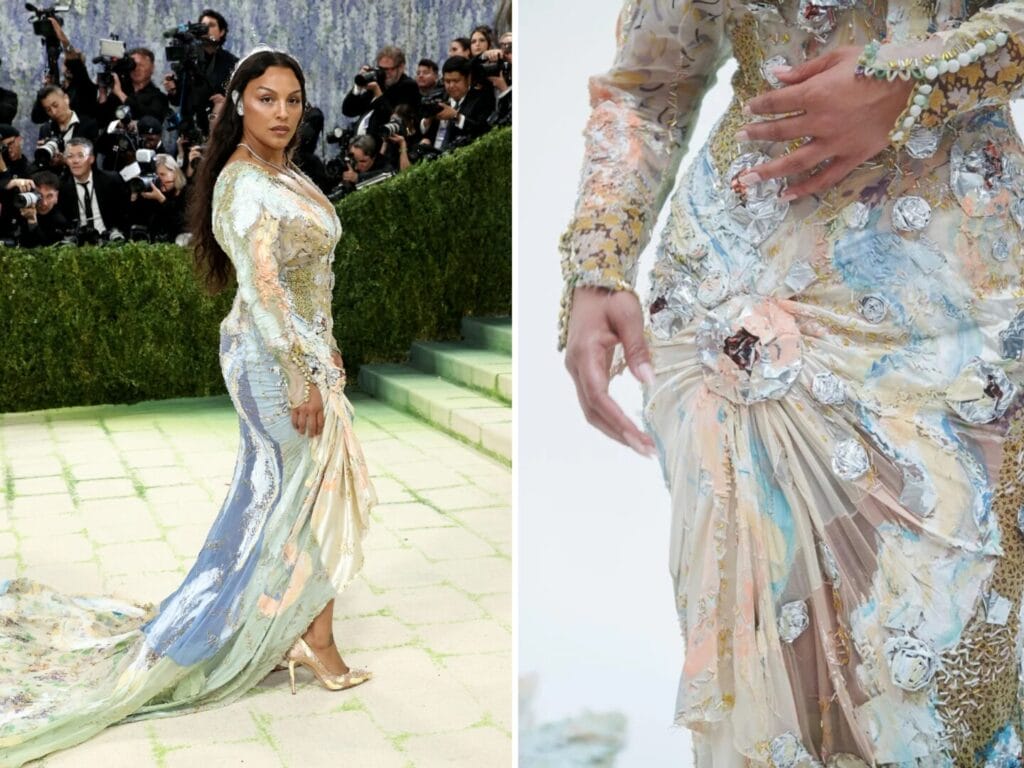
Materiality and reconstruction came into focus with Paloma Elsesser, who wore a custom gown by Bureau of Imagination led by Francesco Risso. The piece was created from nearly 30 dismantled vintage dresses, all collaged back together into one garment. The mix of fabrics and textures gave it a layered, almost painterly quality, like a composition built from fragments. The train dragged behind her like a brushstroke, which tied everything together. It also marked Risso’s debut following his departure from Marni, and it felt like a strong entrance.
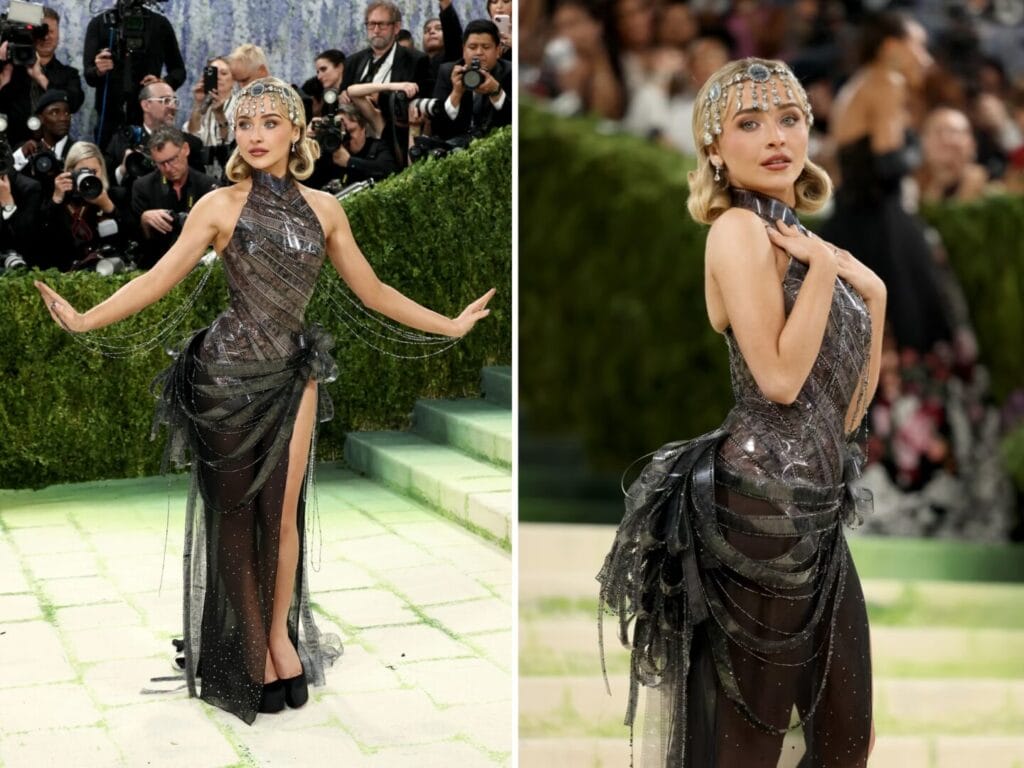
Cinema showed up in a more literal way through Sabrina Carpenter, who wore custom Dior by Jonathan Anderson. Her gown incorporated actual film strips from the 1954 movie Sabrina, embedding the story directly into the fabric. It could have leaned overly referential, but instead it came across as smart and very on theme. Anderson has a way of making ideas like this feel wearable, and this was a clear example.
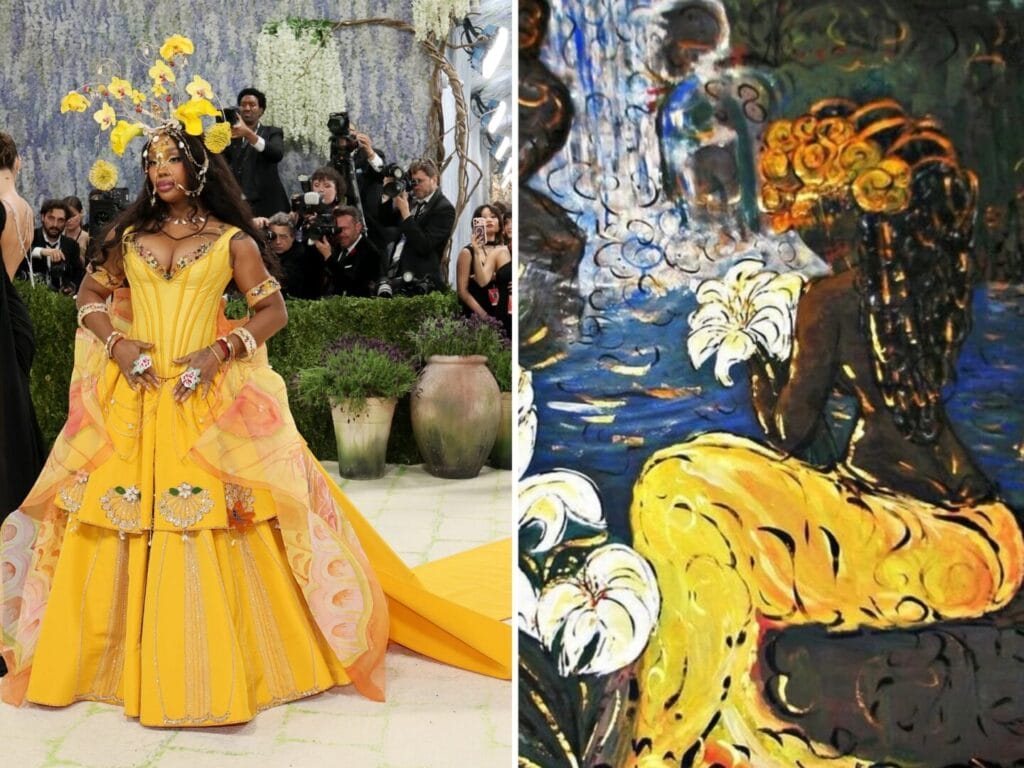
Similarly rooted in material storytelling, SZA wore Bode by Emily Bode. The look was constructed from vintage garments sourced entirely from eBay, transformed into a structured corset, skirt, and sweeping train. A yellow floral headpiece completed the look, referencing Oxum, the Yoruba goddess of beauty, love, and freshwater. The sourcing alone makes it interesting, but the reference gave it more weight. It held your attention
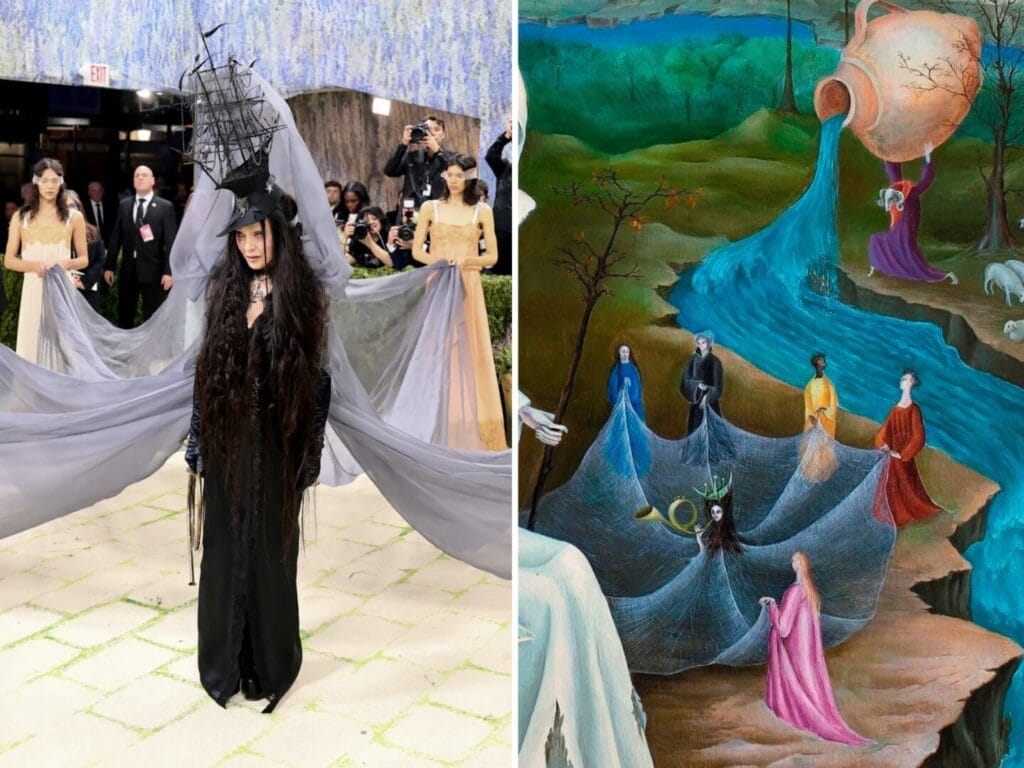
Never one to approach the carpet without intention, Madonna arrived in Saint Laurent by Anthony Vaccarello with a fully realized idea. The look referenced The Temptation of St. Anthony Fragment II by Leonora Carrington, but it extended far beyond the clothing. Surrounded by seven veiled women, carrying a French horn, and wearing a ship-shaped hat with opera gloves, she staged an entire scene on the steps. It was less about a single outfit and more about creating a moment, which she has always understood.
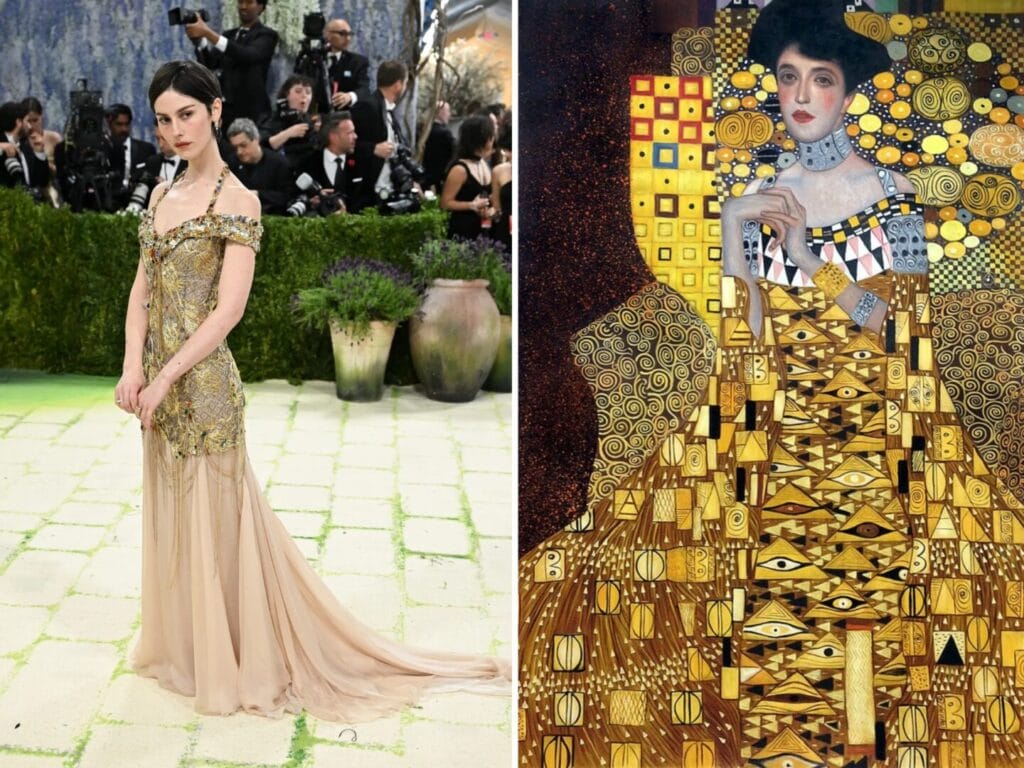
Closing on a softer note, Gracie Abrams wore Chanel by Matthieu Blazy in a gold gown also inspired by Gustav Klimt. The metallic finish and intricate embellishment immediately called to mind Klimt’s signature use of colors, giving the look a richness that still felt soft rather than overworked. With minimal makeup and an almost porcelain finish, everything about the styling felt intentionally restrained, allowing the dress to speak for itself. Compared to much of the carpet, which leaned heavily into volume and theatrics, this felt quieter and more refined. That is exactly why it stood out. It had a quiet confidence that was hard to ignore and proved that not every interpretation of the theme needed to be loud to be effective.
If there was a clear throughline across the night, it was intention. Not everyone fully embraced the theme, but the ones who did made it count. The strongest looks were not just visually impressive, they were grounded in clear references, whether that was fine art, film, cultural symbolism, or material experimentation. The Met Gala has always been a platform for fashion’s most ambitious ideas, and this year felt especially aligned with that purpose. It was not just about dressing for the theme, it was about actually engaging with it. And when it landed, it really landed.
Save Article