
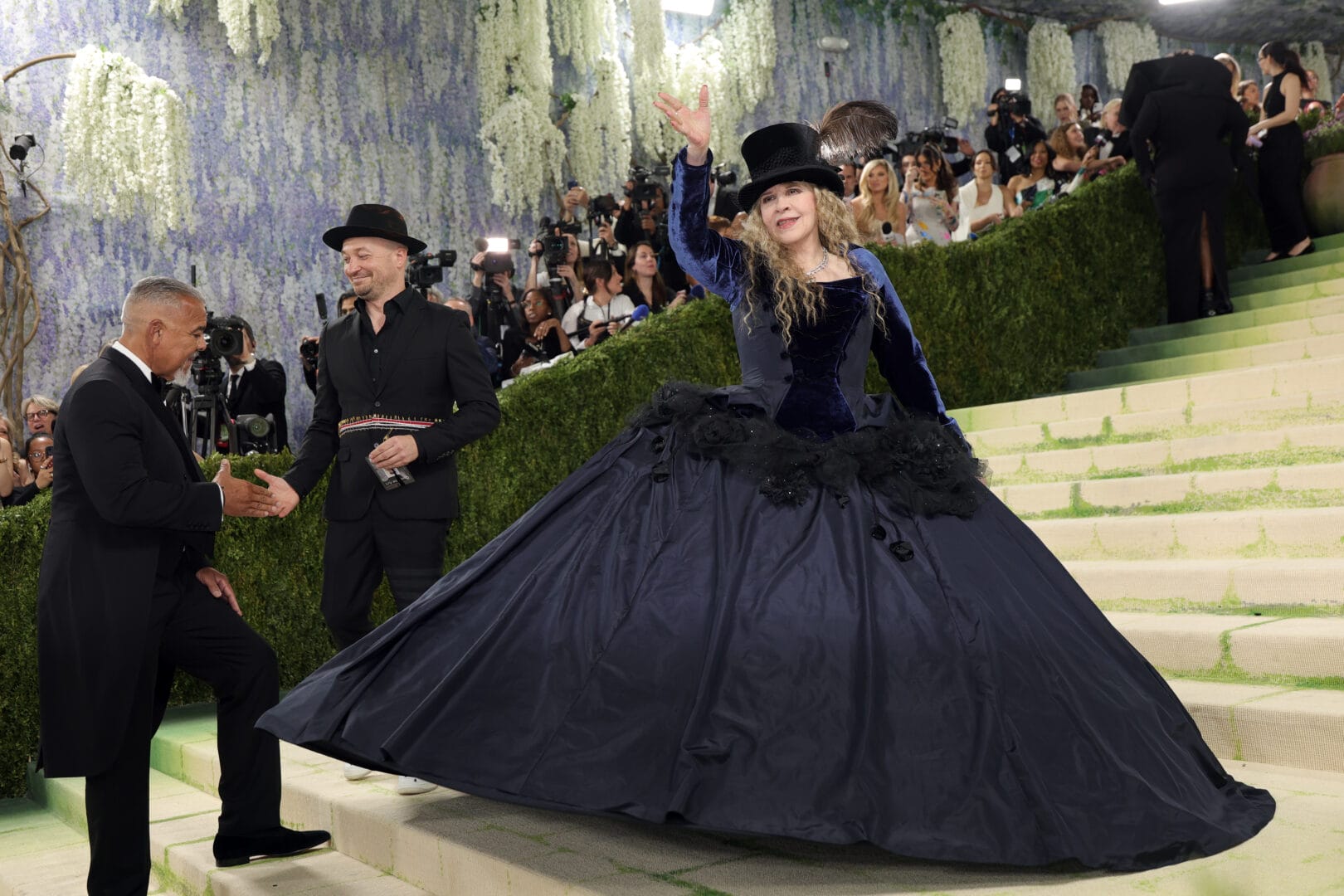
From Stevie Nicks’ John Galliano–for–Zara debut to Kendall Jenner’s sculptural GapStudio transformation and Bad Bunny’s Zara moment, the Met Gala 2026 signals a radical redistribution of fashion power from couture houses to global mass-market giants.
The Night Couture Lost Its Monopoly
The Met Gala 2026 didn’t just deliver spectacle—it delivered a cultural reset.
What was once the undisputed temple of haute couture has now become a stage where global mass-market powerhouses like Zara, Gap, and other high-volume fashion giants are no longer outsiders looking in—they are dressing the moment.
This year’s carpet felt less like a museum of couture and more like a collision zone between luxury heritage houses and hyper-scaled retail empires rewriting their place in fashion history.
And the question echoing through the industry is simple:
Is couture still the gatekeeper of relevance?
Stevie Nicks in John Galliano for Zara: A Defining Cultural Moment
One of the most significant fashion moments of the evening came from Stevie Nicks, attending the Met Gala for the first time.
For the occasion, John Galliano created an exclusive, one-of-a-kind look for Zara—marking a landmark collaboration between couture authorship and global retail scale. Her top hat was designed by Stephen Jones.
Rendered in midnight blue silk taffeta, the ensemble featured a dramatic crinoline silhouette with an overlay skirt intricately embroidered in tulle and chiffon roses appliqué. A structured silk taffeta and velvet jacket anchored the look, while a feather-adorned top hat created in collaboration with milliner Stephen Jones completed the silhouette.
The result was theatrical, romantic, and unmistakably Stevie—yet engineered within the framework of a global retail platform, signaling how couture storytelling is now being translated through mass-market infrastructure.
Kendall Jenner and GapStudio: When a T-Shirt Becomes Sculpture
A defining intellectual counterpoint to the night came from Kendall Jenner, who debuted a custom GapStudio look designed by Zac Posen, transforming the most democratic garment in fashion—the white T-shirt—into a sculptural, museum-grade object.
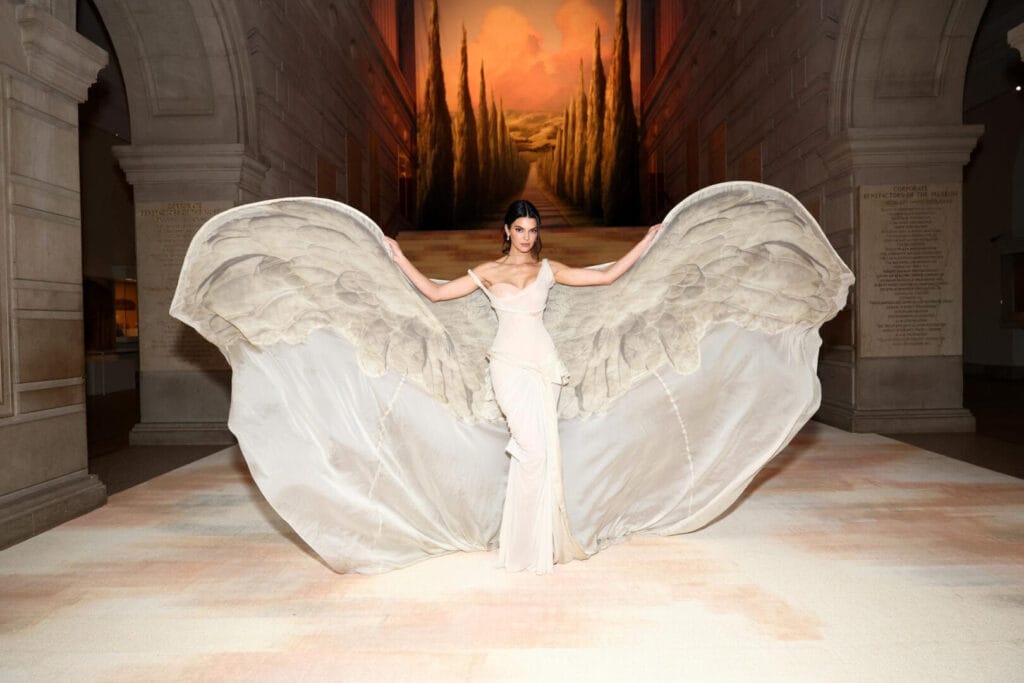
Created at GapStudio, Gap’s highest expression of design and craftsmanship, the look was inspired by the Winged Victory of Samothrace, translating classical drapery and motion into contemporary construction. The result explored the intersection of fashion, art, and the human body as a single unified form.
The design began with a white T-shirt foundation, evolving through engineered draping and manipulation into a liquid-like silhouette constructed over a custom molded leather bodice. Layers of cotton jersey, satin-faced chiffon, and organza created controlled fluidity, while detachable wing-like extensions referenced the original sculpture through photographic print. Hand-dyed tea finishes added depth and patina, evoking the texture of aged classical stone.
Posen described the work as fashion becoming art when the body itself becomes part of the composition—where garment and wearer are inseparable.
The collaboration positioned Gap not as a heritage retailer referencing culture, but as an active producer of cultural artifacts for the global stage.
Bad Bunny and Zara’s Latin Cultural Strategy
Meanwhile, Bad Bunny arrived in a sharply tailored Zara look that reinforced the brand’s accelerating cultural alignment with Latin global influence.

Zara’s deep presence in Puerto Rico and across Latin America has made it a natural participant in shaping contemporary Latin style identity at scale. Bad Bunny’s styling continues that trajectory, linking music, identity, and global retail visibility in one unified cultural signal.
Gap, Zac Posen, and the Reinvention of Mass Luxury
The collaboration between Zac Posen and Gap further underscored a structural shift in American fashion.
GapStudio, launched in 2025, represents the brand’s highest creative platform—where heritage American essentials are reinterpreted through couture-level construction, limited-edition design, and cultural partnerships.
Posen’s approach merges romanticism, sculpture, and American sportswear codes, reframing Gap not as a mass retailer attempting luxury, but as a cultural design house operating at scale.
The New Power Structure of Fashion
The Met Gala 2026 ecosystem—often associated with cultural and financial influence figures such as Jeff Bezos and Lauren Sánchez—reflects a broader shift in how fashion authority is constructed.
Sponsorship, media ecosystems, and global capital now sit alongside editorial gatekeepers and couture ateliers in defining what constitutes a “fashion moment.”
Final Thought
What the Met Gala 2026 ultimately revealed is not the disappearance of couture—but its redistribution.
Luxury is no longer defined by exclusivity alone, but by cultural scalability, technological integration, and mass visibility.
And in that new hierarchy, fast fashion is no longer chasing couture.
#MetGala2026 #StevieNicks #JohnGalliano #ZaraCouture #FastFashion #LuxuryFashion #KendallJenner #GapStudio #ZacPosen #BadBunny
Save Article