
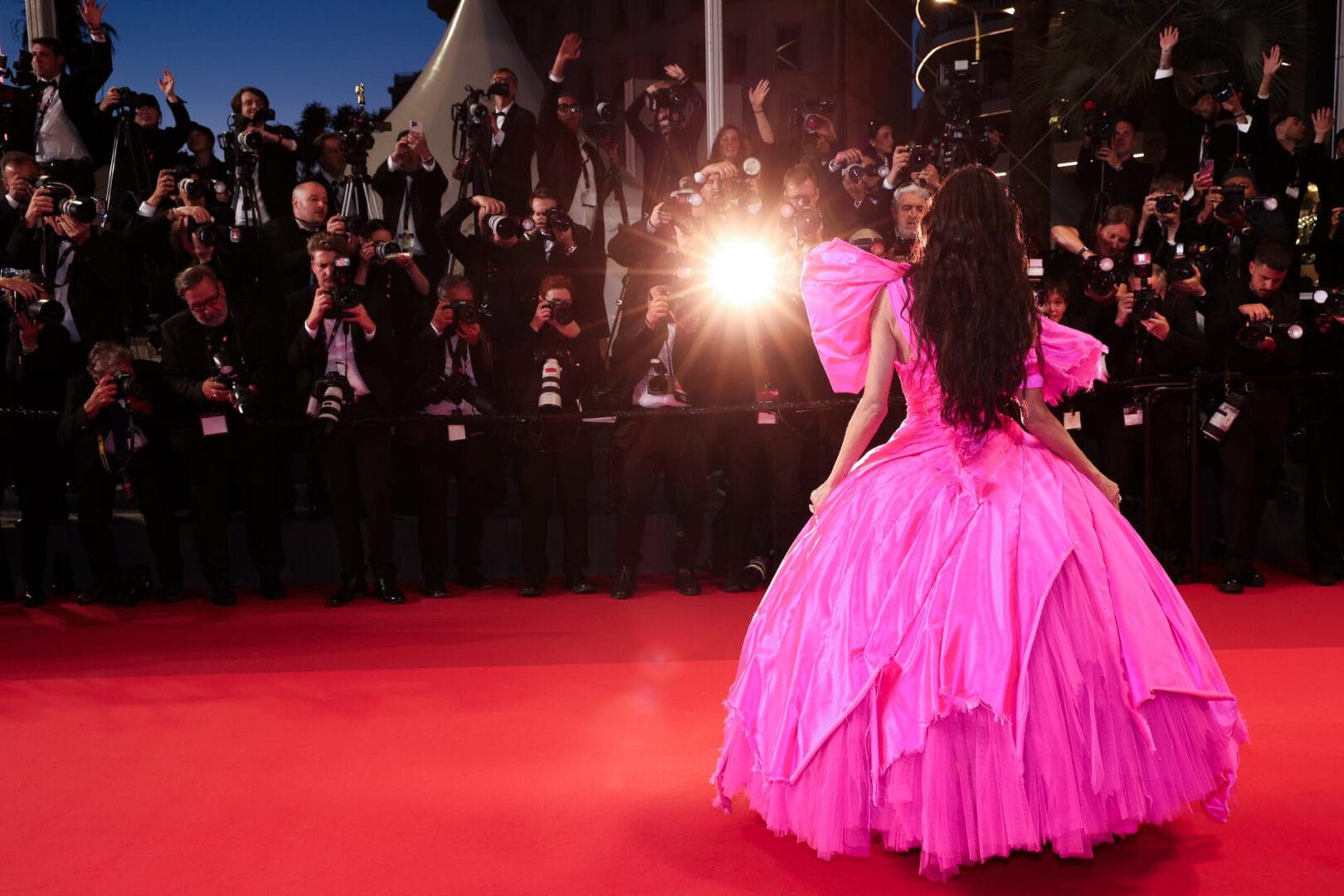
There are very few places in the world where reality feels staged, and staging feels like reality. The Cannes Film Festivalis one of them. Every May, the French Riviera transforms into a living, breathing spectacle of cinema, fashion, celebrity culture, luxury branding, and global influence — all compressed into twelve days that shape the entertainment and fashion industries for the year ahead.
In 2026, Cannes once again reaffirmed its position not just as a film festival, but as the most powerful cultural marketplace in the world. From the Palais des Festivals to the superyachts docked along the Croisette, from the red carpet premieres to the private villas hidden in the hills of Cap d’Antibes, Cannes operates on multiple levels at once — each more exclusive than the last.
From my perspective covering fashion, luxury, and international cultural events, Cannes is not simply an event I attend or observe. It is a system — a highly curated ecosystem where storytelling, image-making, commerce, and influence converge in real time. And while the world sees the red carpet, the real story is what happens behind it.
But to understand Cannes today, you have to understand how it began.
From Post-War Cinema Dream to Global Power Platform
The Cannes Film Festival was founded in 1946, originally conceived as a cultural response to political interference in the Venice Film Festival. What began as a celebration of international cinema quickly evolved into something much larger — a global stage where filmmakers, distributors, critics, and eventually brands came together under one roof.
In its early years, Cannes was about artistic identity. It was about rebuilding cultural dialogue after World War II through cinema. But as the decades progressed, the festival became increasingly intertwined with commerce, fashion, celebrity culture, and global media influence.
By the late 20th century, Cannes was no longer just about films. It was about positioning — for studios, for actors, for fashion houses, and eventually for luxury brands that recognized the festival’s unmatched global visibility.
Today, Cannes is one of the most powerful soft-power platforms in existence. It drives film distribution deals, fashion visibility cycles, luxury brand campaigns, and media narratives that extend far beyond the Riviera.
And in 2026, that evolution is more visible than ever.
Cannes 2026: A Festival Defined by Global Scale and Cultural Density
The 2026 edition of Cannes is particularly significant because of its scale and diversity. According to official festival programming, the lineup includes 22 competition films, alongside major international auteurs from Spain, Japan, Iran, Romania, France, and the United States.
“Fashion at the Cannes Film Festival this 2026 season felt exceptionally refined, elegant, and highly intentional. What stood out in 2026 was a clear return to polished, well-structured styling — classic tailoring, sophisticated silhouettes, and a renewed appreciation for understated luxury on the red carpet. Across the board, looks felt thoughtfully composed and impeccably styled, reinforcing a broader cultural shift toward timeless dressing and elevated simplicity. It was a reminder that true impact often comes from restraint, and that well-executed, cohesive style will always resonate most powerfully in moments of global visibility.”
— Joseph DeAcetis, Editor at Stylelujo.com
The jury, led by acclaimed South Korean filmmaker Park Chan-wook, reflects Cannes’ continued commitment to global cinematic perspectives rather than purely Hollywood-driven narratives. At the same time, the festival maintains its traditional structure: premieres at the Palais, nightly screenings, red carpet arrivals, and parallel programs that transform Cannes into a city-wide cinematic experience.
But beyond the films themselves, what defines Cannes is its ecosystem — a layered world of events that extend far beyond cinema.
During the 79th Annual Cannes Film Festival, the French Riviera once again became the epicenter of global cinema, luxury fashion, media, and influence — with top publicists, brand strategists, and entertainment executives orchestrating every detail behind the scenes. Among the standout professionals navigating the fast-paced Cannes landscape was Cygalle Dias, founder of CDLM Media, who curated and managed festival experiences, strategic appearances, and luxury hospitality activations for distinguished business leaders and festival attendees including Shelly Berensen and Sara Jacobi.
From coordinating fashion placements and securing access to exclusive premieres and luxury events, to managing high-level hospitality experiences throughout Cannes, Dias exemplified the critical role media and PR professionals play during the festival season. At Cannes, success is often determined not only by who attends, but by where they are seen, how they are presented, and the relationships cultivated throughout the week.
Much of that activity centers around iconic destinations such as the legendary Hôtel du Cap-Eden-Roc, where industry leaders, celebrities, fashion executives, and global tastemakers gather for private dinners and networking throughout the festival. Renowned for its exceptional hospitality and discreet luxury service, the property remains one of the most sought-after destinations of Cannes week, with respected hospitality professionals such as Maxime Courvé helping define the elevated guest experience that has become synonymous with the Riviera’s most prestigious gatherings.
Walking through Cannes during festival week, you experience it in waves: morning press screenings, midday brand activations, afternoon yacht departures, sunset red carpets, and late-night villa gatherings. It is a 24-hour cycle of visibility and influence.
And while the films remain central, the cultural gravitational pull increasingly lies in everything surrounding them.
The Red Carpet: Still Cinema’s Most Powerful Runway
The red carpet at the Palais des Festivals remains the symbolic heart of Cannes. It is here that cinema, fashion, and celebrity converge in their most visible form. In 2026, the red carpet continues to serve as a global broadcast platform — where every step, pose, and camera flash becomes part of a worldwide media narrative.
This year, standout appearances included international icons such as A-list actors, models, and cultural figures, with fashion houses using Cannes as a strategic stage for couture visibility. From archival gowns to custom runway pieces, the red carpet remains one of the most influential marketing platforms in global fashion.
“Cannes 2026 marked a decisive return to restraint on the red carpet, signaling a broader recalibration in luxury fashion. There was a clear shift toward sharper tailoring, lighter and more refined color palettes, and a noticeable reduction in overtly provocative or risk-driven styling. In their place emerged a renewed emphasis on sophistication and controlled elegance.
Historically, periods of economic uncertainty have often influenced fashion to move away from excess and toward more subtle expressions of luxury. This year at Cannes, that theory was visually reinforced. The red carpet reflected a preference for investment dressing over ostentation—where confidence is expressed through craftsmanship, silhouette, and fabric rather than spectacle.
Ultimately, Cannes 2026 underscored a return to timelessness, suggesting that both luxury consumers and brands are aligning with a more considered, less ostentatious aesthetic cycle.”
— Amy Grammer, Designer and Owner, Milliners Row
But what most people don’t see is that the red carpet is only the beginning.
Within minutes of stepping off the carpet, guests move into private screenings, afterparties, brand dinners, and yacht transfers — each environment more exclusive than the last.
Cannes is not a single event. It is a layered system of access.
CANNES WINNERS STYLE: EMMANUEL MACCHIA IN DOLCE&GABBANA

At the closing ceremony of the 79th Annual Cannes Film Festival, actor Emmanuel Macchia posed with the “Best Actor” award for Coward during the Palme d’Or winners photocall at the Palais des Festivals wearing Dolce & Gabbana.
Macchia selected a sophisticated double-breasted wool tuxedo with peak lapels, tailored wool trousers, black tuxedo shirting, a satin bowtie, rhinestone brooch, and glossy patent derby shoes.
From my perspective, the look captured the spirit of classic Cannes elegance perfectly. The styling felt timeless, cinematic, and celebratory without appearing overworked. The addition of the jeweled brooch added just enough personality to elevate the formalwear while maintaining the sophistication expected on one of cinema’s most important stages.
CANNES OPENING NIGHT: DEMI MOORE IN CUSTOM JACQUEMUS

At the opening ceremony of the 79th Annual Cannes Film Festival, jury member Demi Moore made a commanding red carpet statement in custom Jacquemus from the “Le Palmier” collection designed by Simon Porte Jacquemus.
Moore wore “La Robe Cubisto Longue,” a sculptural sequined bustier gown with an extended train, paired with “Les Escarpins Tournis” pumps in lamb nappa leather layered with sequined fabric.
From my perspective, the look perfectly captured the elegance and architectural glamour that dominated Cannes 2026. The sculptural silhouette felt modern yet timeless, reinforcing Demi Moore’s status as one of the festival’s most sophisticated and fashion-forward presences on the red carpet.
CANNES RED CARPET LOOK: RAMI MALEK IN ZEGNA
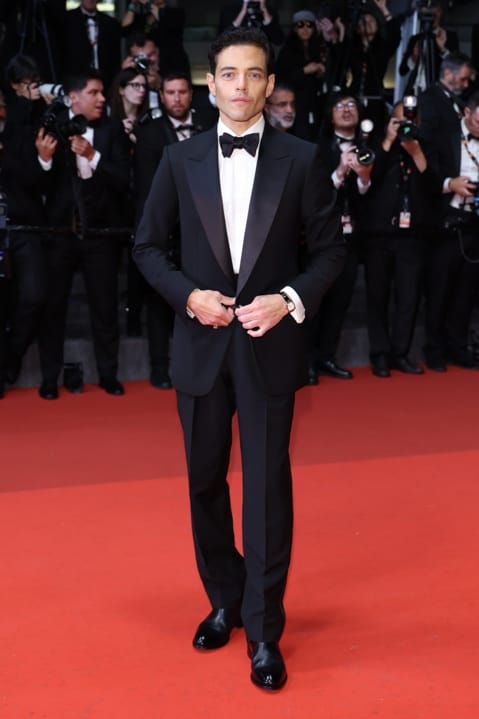
image reinforces Rami Malek’s position as one of the most consistently
elegant presences on the Cannes red carpet.
At the 79th Annual Cannes Film Festival, actor Rami Malek arrived at the premiere of “The Man I Love” at the Palais des Festivals wearing Zegna.
Malek opted for a 2026 Red Carpet Collection black wool and silk peak lapel single-breasted jacket paired with matching straight-leg trousers, a white silk tuxedo shirt, black silk bow tie, and black leather Torino boots.
In my view, this was one of the most refined menswear moments of Cannes 2026. The look was sharp, modern, and intentionally restrained — a perfect example of quiet luxury executed at the highest level. Rather than competing for attention, it commanded it through precision tailoring and understatement.
CANNES STYLE SPOTLIGHT: EVA LONGORIA IN SERGIO HUDSON SS26
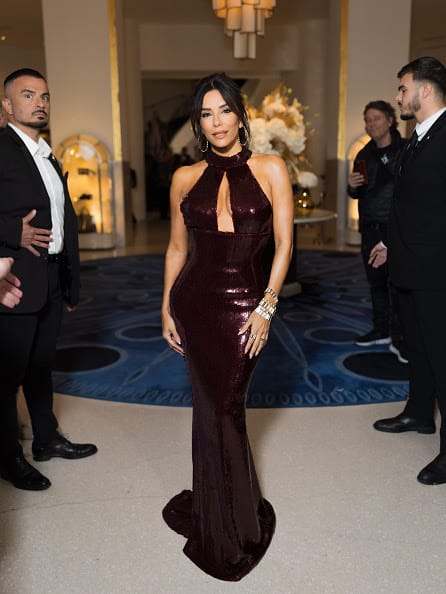
At the 79th Annual Cannes Film Festival, actress and producer Eva Longoria made a striking red carpet appearance wearing Sergio Hudson Spring/Summer 2026.
Longoria’s look delivered a powerful modern silhouette that aligned perfectly with Cannes’ evolving red carpet language — where structure, confidence, and high-impact tailoring define true presence.
From where I stand, this was one of her strongest Cannes appearances in recent years. The look felt intentional and elevated, balancing glamour with control and reinforcing Longoria’s position as one of the most consistent style forces on the Croisette.
CANNES RED CARPET LOOK: ADAM DRIVER IN ZEGNA
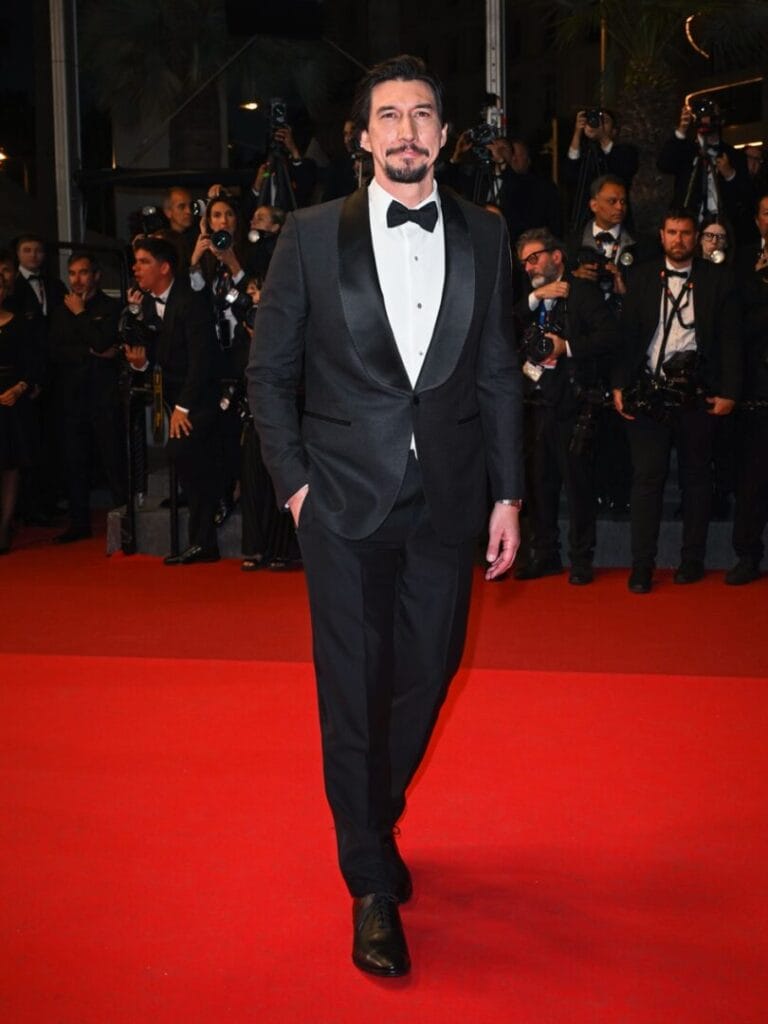
the Paper Tiger screening at the Palais des Festivals wearing Zegna.
Photographed by Getty Images and cleared for editorial usage.
Driver appeared in a black wool and silk shawl lapel tuxedo, paired with a crisp white tuxedo shirt, black silk bow tie, and The Park Avenue Cap-toe Oxford leather Dress Shoe by AllenEdmonds.com. The look was sharply tailored, minimal, and deeply traditional in its construction.

Actor Adam Driver attended the screening of “Paper Tiger” at the 79th Annual Cannes Film Festival in France wearing Allen Edmonds’ Park Avenue Cap-toe Oxford Dress Shoe in black.
The Park Avenue Cap-toe Oxford Dress Shoe retails for $450.00 USD and is available at AllenEdmonds.com.
In my opinion, this was one of the most powerful examples of modern red carpet menswear at Cannes 2026. The silhouette was disciplined and architectural, reflecting a return to pure formal elegance without unnecessary embellishment. What made it stand out was its restraint — a confident, almost cinematic simplicity that felt perfectly aligned with the tone of the festival.
CANNES COUTURE SPOTLIGHT: LÉA SEYDOUX IN CUSTOM LOUIS VUITTON

At the 79th Annual Cannes Film Festival, actress Léa Seydoux delivered one of the festival’s most technically sophisticated couture moments in custom Louis Vuitton designed by Artistic Director of Women’s Collections Nicolas Ghesquière for the Gentle Monster premiere.
Seydoux wore an off-the-shoulder black satin gown featuring intricate molded plissé construction paired with black satin pumps. The gown showcased extraordinary savoir-faire, requiring more than 450 hours of craftsmanship to perfect its sculptural silhouette and signature “tronconique” plissé technique. She completed the look with Louis Vuitton High Jewelry pieces including the Pure V necklace, Infini ring, and diamond earrings in white gold.
As I see it, this was one of the most intellectually beautiful fashion moments at Cannes 2026. The look embodied precision, innovation, and couture artistry at the highest level while maintaining the timeless elegance that defined this year’s red carpet season. Rather than relying on excess, the power of the look came through craftsmanship, movement, and architectural sophistication — a true reflection of modern luxury fashion.
CANNES STYLE SPOTLIGHT: CARLOS SAINZ JR. IN GIRARD-PERREGAUX

At the 79th Annual Cannes Film Festival, Formula One driver Carlos Sainz Jr. brought a refined sense of precision and luxury to the red carpet. He was in attendance on the French Riviera as a brand ambassador for L’Oréal Paris, accompanied by his partner, Scottish model Rebecca Donaldson
Sainz Jr. wore a classic Tuxedo by Giorgio Armani and the iconic Girard-Perregaux Tourbillon with Three Flying Bridges — a 44mm pink gold case featuring three pink gold bridges, a hidden white gold micro-rotor, sapphire crystal box, and the house’s signature automatic movement, showcasing the brand’s mastery of technical watchmaking.
From my perspective, this was one of the most compelling luxury timepiece moments at Cannes 2026. The watch felt less like an accessory and more like a statement of engineering artistry — perfectly aligned with Sainz Jr.’s identity as a precision athlete and reinforcing the growing crossover between high-performance sport and high-end horology on the Riviera.
CANNES RED CARPET LOOK: RILEY KEOUGH IN CUSTOM ALAÏA

At the 79th Annual Cannes Film Festival, actress Riley Keough attended the screening of Soudain wearing a custom creation by Alaïa.
Keough appeared in a sculptural corseted bustier dress crafted in silk taffeta, featuring a cinched waist and dramatic volume at the hips — a silhouette that emphasized architectural precision and couture craftsmanship.
From my perspective, this was one of the most striking feminine silhouettes on the Cannes 2026 red carpet. The look perfectly balanced strength and elegance, with Alaïa’s signature sculptural tailoring creating a powerful yet refined statement that felt both modern and timeless.
How Cannes Became the Ultimate Luxury Ecosystem
Over time, Cannes has evolved into something far beyond film. It is now a convergence point for luxury brands, tech investors, media conglomerates, and global tastemakers.
Luxury fashion houses use Cannes as a global visibility engine. Jewelry brands secure red carpet placements worth millions in exposure. Hospitality groups transform hotels into branded ecosystems. And yacht companies turn the Mediterranean into a floating private club.
In 2026, Cannes is less about attending events and more about navigating tiers of access:
- Public premieres
- Industry screenings
- Brand-hosted dinners
- Yacht activations
- Private villa gatherings
Each layer represents a different level of influence.
And at the top of this ecosystem sits a handful of legendary locations that define the festival experience.
The Most Important Places at Cannes 2026
1. Hôtel du Cap-Eden-Roc (Antibes)
Still the most powerful address of the festival, the Hôtel du Cap-Eden-Roc remains the epicenter of luxury gatherings. It is here that philanthropic galas, fashion dinners, and ultra-private events define the festival’s most influential conversations.
2. The Cannes Yacht Scene
The harbor becomes a floating city of superyachts hosting private parties, brand activations, and investor meetings. These events often carry more influence than red carpet premieres, functioning as informal deal-making environments.
3. Hotel Martinez & Carlton Cannes
These iconic properties on the Croisette serve as the central nervous system of Cannes nightlife. Suites become temporary headquarters for studios, brands, and talent agencies.
4. Palais des Festivals
The official heart of Cannes — where films premiere, awards are contested, and global cinema narratives are shaped.
5. Private Villas in Cap d’Antibes
The most exclusive layer of Cannes life. These villas are where real deals are finalized away from cameras — often extending until sunrise.
CANNES RED CARPET LOOK: ROMEE STRIJD IN CAROLINE’S COUTURE & CHOPARD

At the 79th Annual Cannes Film Festival, model Romee Strijd made a glamorous appearance wearing the new 2026 collection by Caroline’s Couture, paired with exquisite jewelry from Chopard.
The look featured a breathtaking long evening gown with a deep V-neckline in nude tulle, entirely embroidered with transparent embossed sequins and crystals, and adorned with a dramatic cascade of laser-cut white flowers and foliage.
From my point of view, the look perfectly captured the romantic elegance and couture craftsmanship that dominated Cannes 2026. The intricate detailing and ethereal silhouette created a striking red carpet moment that felt both timeless and modern on the Croisette.
CANNES STYLE SPOTLIGHT: SHELLY BERENSEN IN GENNY SS2026

the Red Carpet at the Variety event at Cannes
At the 79th Annual Cannes Film Festival, Shelly Berensen made an elegant appearance wearing a Spring/Summer 2026 look by Genny.
Personally, I would say, the look embodied the refined sophistication that defined Cannes fashion this season. Polished, feminine, and impeccably styled, the ensemble reflected the festival’s continued embrace of timeless glamour and elevated dressing on the Riviera.
Fashion at Cannes: The Real Power Language of the Festival
If cinema is the soul of Cannes, fashion is its visual language.
In 2026, fashion at Cannes has reached a level of strategic importance that rivals film itself. Every appearance is a global media moment. Every look is a branding opportunity. Every designer placement is a cultural investment.
Luxury houses treat Cannes as a battlefield of visibility — where image, influence, and identity converge.
From couture gowns on the red carpet to curated runway presentations and yacht-side styling, fashion is not just present at Cannes — it defines it.
CANNES STYLE SPOTLIGHT: LEÏLA BEKHTI’S VINTAGE FASHION TRIBUTE ON THE CROISETTE

At the 79th Annual Cannes Film Festival, actress and “Un Certain Regard” jury president Leïla Bekhti delivered one of the festival’s most thoughtful and culturally significant fashion narratives by building her entire Cannes wardrobe around vintage and archival couture.
For the Opening Ceremony, Bekhti wore a Fall/Winter 2002 gown by Guy Laroche sourced through Yourgarmentz, paired with jewelry by Chaumet.
To my eye, Bekhti’s approach represented one of the most elegant and intelligent style statements of Cannes 2026. Rather than chasing trends, she embraced fashion history, craftsmanship, and sustainability — proving that archival fashion can feel deeply modern, emotional, and incredibly sophisticated on today’s red carpet- reinforcing the idea that great fashion never loses its cultural relevance.
CANNES ELEGANCE: SARA JACOBI IN SELF-PORTRAIT & CHANEL

paired withChanelshoes and accessories.
At the 79th Annual Cannes Film Festival, Sara Jacobi made an elegant Riviera appearance wearing Self-Portrait, styled with a luxurious black mink shawl and accessories by Chanel.
The look was completed with Chanel jewelry and shoes, creating a polished and sophisticated silhouette that reflected the timeless glamour of Cannes.
I found the ensemble to be perfectly balanced modern femininity with classic luxury. The styling felt graceful, refined, and exceptionally well-composed — a standout example of understated elegance on the Croisette in 2026.
CANNES RED CARPET STYLE: NOUR ARIDA IN CAROLINE’S COUTURE & CHOPARD

At the 79th Annual Cannes Film Festival, model Nour Arida delivered a striking red carpet moment wearing Caroline’s Couture, paired with fine jewelry by Chopard.
The look captured the essence of Riviera glamour with a refined couture silhouette that emphasized elegance, poise, and modern femininity. Styled for maximum impact under the Cannes lights, the ensemble highlighted both craftsmanship and contemporary red carpet sophistication.
Nour Arida looked exceptional. As a model, she naturally commands presence, and this appearance reinforced that strength effortlessly. The gown moved beautifully, the styling felt polished and intentional, and the overall look stood out as one of the more graceful and camera-ready moments of Cannes 2026 — confident, elevated, and perfectly suited for the Croisette.
Yachts, Nights, and the Real Cannes Economy
Beyond the red carpet lies the true economy of Cannes: the nightlife ecosystem.
Yacht parties dominate the harbor every evening. These are not casual celebrations — they are highly curated environments where investors, celebrities, creatives, and executives connect.
Meanwhile, villas in the hills host private dinners that often determine future collaborations, film financing deals, and brand partnerships.
Cannes after dark is where influence is exchanged in its purest form — quietly, privately, and strategically.
Cannes Today: A Global Cultural Operating System
What makes Cannes so powerful in 2026 is not just its history, but its transformation.
It is no longer simply a film festival. It is:
- A global media marketplace
- A luxury branding platform
- A fashion capital for two weeks
- A networking hub for entertainment and finance
- A cultural signal of global influence
And yet, despite all of this evolution, cinema still anchors everything.
The films remain the reason the world comes to Cannes. But everything around them — the fashion, the yachts, the hotels, the parties — has become part of a larger cultural machine.
Final Reflection
From where I stand, Cannes is not just an event you attend — it is an experience you navigate.
It is a place where visibility becomes currency, where storytelling extends beyond film, and where influence is measured not only by applause in a theater but by who is in the room, on the yacht, or at the table after midnight.
In 2026, the Cannes Film Festival remains exactly what it has always been — and something far more complex: a mirror of global culture, where cinema, fashion, and power intersect on the most glamorous stage in the world.
And every year, that mirror gets bigger, brighter, and more influential than the last.
Save Article