
Denim is the most democratic fabric in fashion. Presidents wear it. Rock stars live in it. Cowboys built their legend in it. And today, a new generation is rediscovering its power.
But before we talk about the future—before we discuss the bold new silhouettes unveiled in the Spring/Summer 2026 collection from Levi’s—we must first settle one of fashion’s longest-running debates:
Who actually invented denim?
Like many great cultural inventions, denim has no single birthplace. Instead, it evolved across continents, industries, and centuries before becoming the iconic American garment we know today.
Understanding that history makes the latest evolution of denim—especially in menswear—far more meaningful.
The Global Origins of Denim: France, Italy, India… and a Little Controversy
Fashion historians have long debated where denim truly began.
Some point to France, where the fabric known as “serge de Nîmes” was produced in the city of Nîmes during the 17th century. Many historians believe the term denim comes directly from this phrase—de Nîmes, meaning “from Nîmes.”
Others argue the story begins in Italy, specifically the port city of Genoa, where sailors wore durable cotton trousers during the 1500s. French merchants referred to these workers as Genes, which later evolved linguistically into the word “jeans.”
Still others trace denim’s roots further east to India, where indigo-dyed cotton textiles—similar in construction to early denim—were traded throughout Europe centuries earlier. These fabrics were valued for their durability and deep blue color produced from natural indigo dye.
In reality, denim likely emerged from a fusion of these textile traditions.
By the time the fabric crossed the Atlantic in the 19th century, its destiny would change forever.
A Short Timeline of Denim: From Workwear to Global Uniform
Here are a few of the most important milestones in denim’s evolution:
1500s – Genoa, Italy
Sailors wear durable cotton work trousers made from heavy twill fabric. The term “jeans” begins evolving from the French word for Genoa.
1600s – Nîmes, France
Textile mills produce “serge de Nîmes,” a sturdy twill fabric widely believed to inspire the term denim.
1700s–1800s – Global Indigo Trade
Indigo dye becomes one of the most valuable commodities in textile production.
1853 – The California Gold Rush Era
Levi Strauss opens a dry goods business in San Francisco supplying miners and laborers.
1873 – The Birth of Blue Jeans
Jacob Davis and Levi Strauss receive the patent for riveted work pants—creating the world’s first modern blue jeans.
1890 – The 501 is born
The iconic 501 jean becomes the brand’s signature model.
1950s – Denim Goes Global
American mills export denim machinery to Japan, unintentionally helping launch one of the world’s most respected denim industries.
1970s–1990s – Designer Denim Era
Denim evolves from workwear into fashion.
2000s–2020s – Premium and Heritage Denim
Consumers seek authenticity, craftsmanship, and heritage production methods.
2026 – Denim Reinvented
Loose silhouettes and Americana nostalgia drive the next era of menswear.
The American Story: How Denim Became a National Symbol
While denim’s origins span continents, its cultural identity is undeniably American.
The fabric became synonymous with rugged individualism during the California Gold Rush, when laborers demanded clothing that could survive punishing conditions.
That demand led to one of the most important innovations in apparel history.
Tailor Jacob Davis had the idea of reinforcing work pants with copper rivets at stress points—pockets, seams, and fly openings. Recognizing the brilliance of the idea, he partnered with Levi Strauss, and together they patented the design in 1873.
The modern blue jean was born.
Over the next century, denim transformed from miners’ uniform to cultural icon—embraced by cowboys, Hollywood rebels, rock musicians, and eventually every generation that followed.
How America Lost Its Denim Factories
Ironically, despite denim’s deep American roots, most denim is no longer made in the United States.
During the mid-20th century, American manufacturers exported advanced denim machinery overseas—especially to Japan.
What happened next would change the industry forever.
Japanese textile mills became obsessed with preserving traditional craftsmanship. They restored vintage shuttle looms, perfected indigo dye techniques, and studied American denim history with near-scholarly intensity.
Today, Japanese selvedge denim is widely considered among the finest in the world.
Meanwhile, American denim manufacturing declined as production moved overseas in search of lower labor costs.
Many historic U.S. mills closed.
Even heritage brands that defined American denim—including Levi’s—now produce most of their jeans internationally.
The New Consumer Movement: Made in America Matters Again
But something fascinating is happening.
Gen Z and Millennials are demanding transparency, sustainability, and domestic production.
Young consumers increasingly want to know:
- Where their clothing is made
- Who made it
- How it was produced
For many shoppers, Made in America carries cultural, economic, and environmental value.
Domestic production means:
• Shorter supply chains
• Reduced carbon footprint
• Stronger labor standards
• Revitalized local economies
It also reinforces something deeper: heritage authenticity.
“Denim made in America is becoming increasingly important to younger consumers because it represents far more than just a pair of jeans—it reflects values. Gen Z and Millennials are gravitating toward denim that is made in the USAbecause it stands for authenticity, sustainability, and national pride. These consumers want transparency in how their clothing is produced and they increasingly support brands that invest in domestic manufacturing and skilled American labor. We’re seeing a growing interest in heritage craftsmanship and small-batch production, particularly among brands that cut and sew their denim in the United States. Labels such as Imogene + Willie, Gustin, Dearborn Denim, and Brave Star Selvage are gaining traction with young men who want jeans that are not only stylish but meaningful—products that support American jobs and revive the country’s cotton farms and historic denim manufacturing tradition.” — Joseph DeAcetis, Editor at StyleLujo.com and Menswear Professor at FIT
After all, if denim is America’s national fabric, shouldn’t more of it be produced here?
This question is beginning to reshape the denim conversation.
The Menswear Market: Loose Denim Is Back
If the 2010s were defined by skinny jeans, the 2020s belong to relaxed silhouettes.
Across runways and retail floors, menswear is shifting toward:
- Loose fits
- Vintage proportions
- 1990s and early-2000s nostalgia
- Workwear authenticity
The return of relaxed denim reflects a broader cultural change. Consumers want clothing that feels effortless, comfortable, and expressive.
Rigid, tight silhouettes no longer reflect the mood of modern menswear.
And that’s where Levi’s enters the conversation again.
Levi’s Spring/Summer 2026: Americana Reimagined
For Spring/Summer 2026, Levi’s is leaning deeply into its heritage while pushing denim silhouettes forward.
The standout innovation is the 501 Loose.
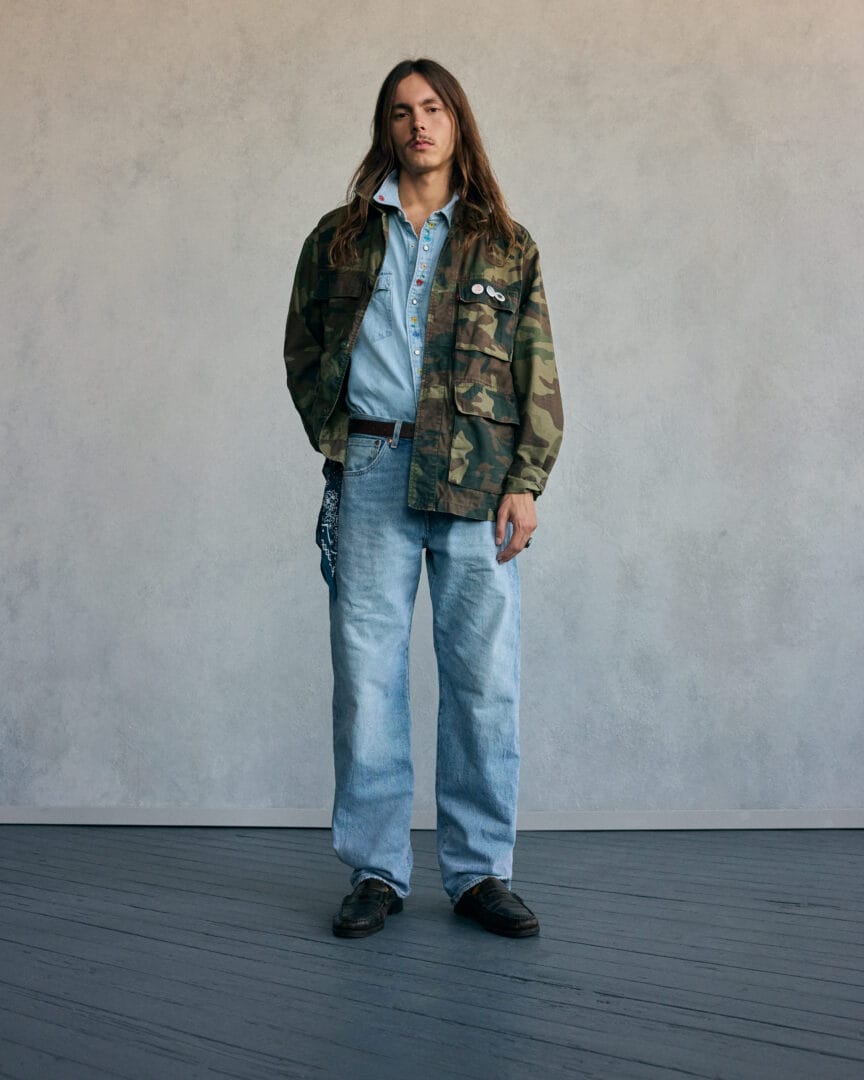
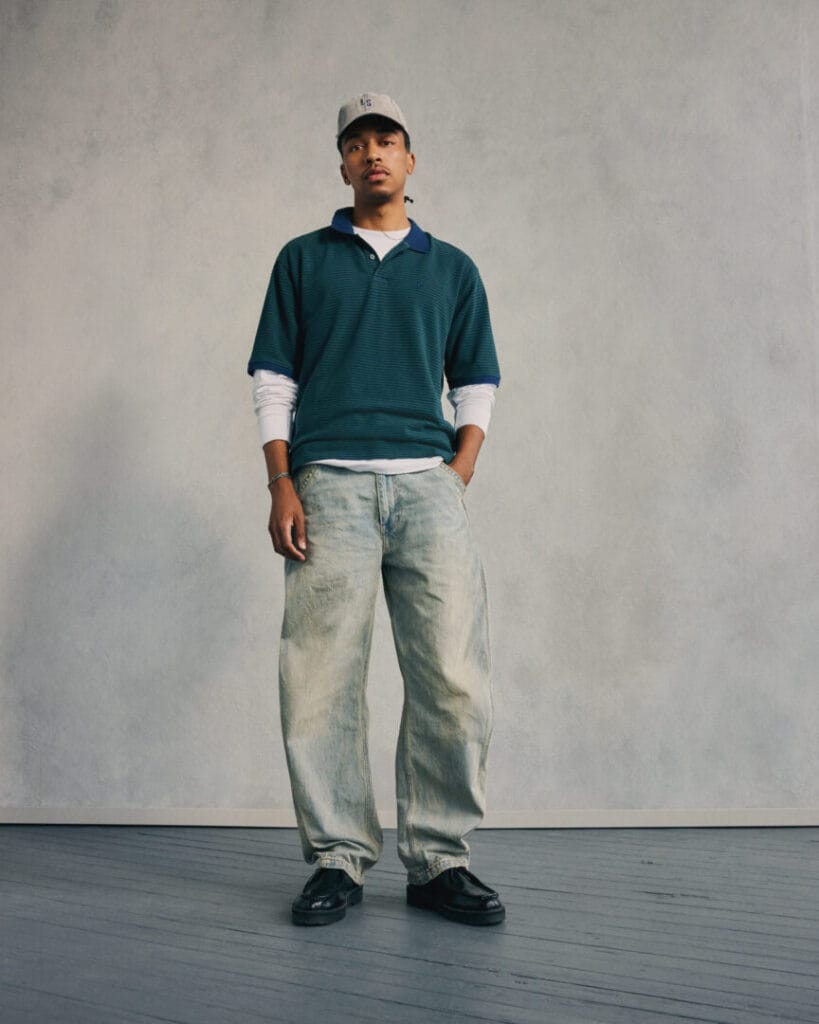
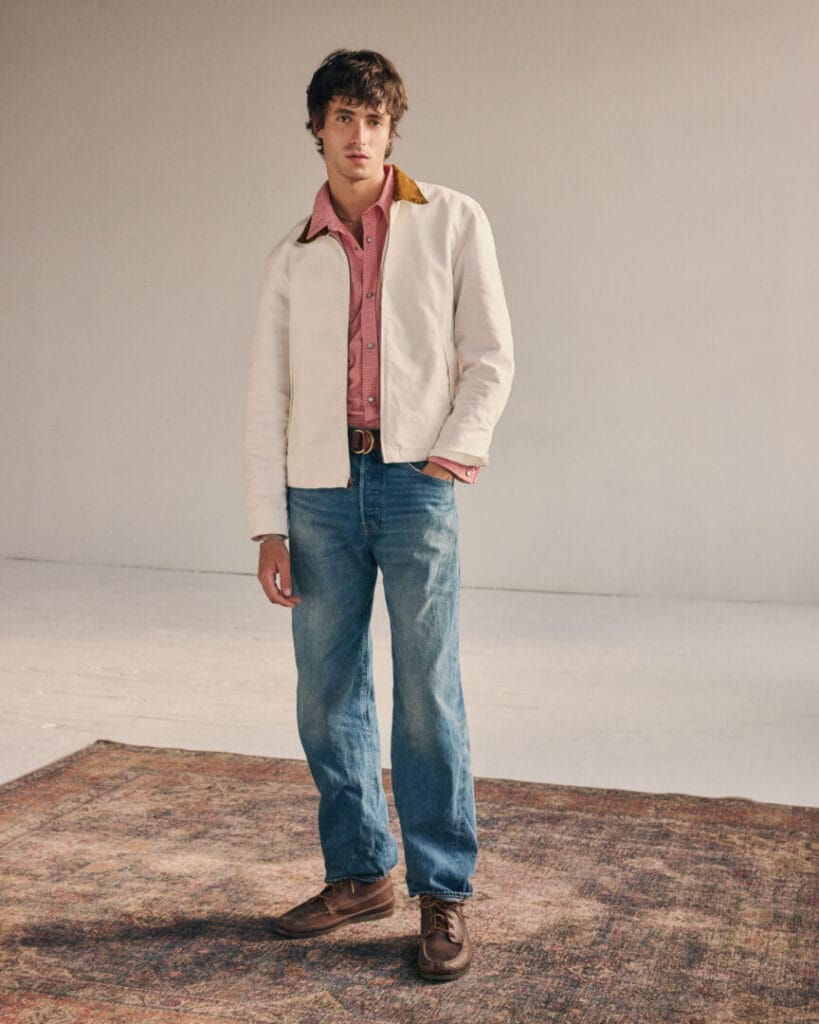
The most notable style debuting for men in the collection is the 501 Loose, the first loose fit introduced to the 150+ year-old silhouette. New styles like the Baggy Barrel push the Americana aesthetic forward, while elevated tops including the Lama Cropped Shirt, Finn Boxy Polo, and Frisko Jacket bring updated proportions and texture to classic Western-inspired dressing.
For more than 150 years, the 501 has remained one of fashion’s most recognizable garments. Introducing a loose fit to that legendary silhouette represents a significant evolution.

Although Levi’s refers to this group of styles as part of an “American” collection—celebrating the brand’s heritage rooted in the California Gold Rush—the reality is that none of the pieces are currently produced in the United States. While the label remains one of the most recognizable symbols of American style, most of its denim manufacturing today takes place overseas. This disconnect can present a challenge with modern consumers, particularly Gen Z and Millennials, who are increasingly seeking out authentic American brands that are not only inspired by U.S. heritage but are also actually made in the USA. For many of these shoppers, domestic production represents sustainability, transparency, and national pride—values that are becoming central to how younger generations choose the brands they support.
Made in the USA resonates strongly with today’s consumers, especially Gen Z and Millennials who value sustainability, transparency, and supporting American jobs. While Levi’s often celebrates its American heritage and Americana-inspired collections, most of its denim is no longer produced in the United States. This raises a growing question among younger shoppers: if the brand’s identity is rooted in American history, why isn’t it made in America?
The 501 Loose retains the DNA of the original jean while introducing:
• relaxed proportions
• modern comfort
• a more contemporary attitude
It feels both nostalgic and progressive.
Another standout is the Baggy Barrel jean, which pushes the Americana aesthetic even further. With exaggerated shape and volume, it reflects the growing appetite for statement denim.
The look is unmistakably modern—but rooted in classic workwear tradition.

The New Americana Wardrobe
Denim may be the backbone of the collection, but the supporting pieces elevate the full look.
Menswear highlights include:
Lama Cropped Shirt
A bold reinterpretation of Western shirting with updated proportions.
Finn Boxy Polo
A relaxed knit that balances structure with casual ease.
Frisko Jacket
A modern take on heritage outerwear with texture and rugged attitude.
Together, these pieces create a wardrobe that feels distinctly American yet unmistakably contemporary.
It’s the kind of clothing designed to be worn every day—not just styled for fashion editorials.
Why Loose Denim Is Winning Right Now
The resurgence of loose denim reflects more than nostalgia.
It reflects freedom.
Younger consumers want clothing that allows movement, individuality, and comfort. Baggy silhouettes also align with the influence of streetwear, skate culture, and vintage fashion.
In other words, the denim market is experiencing a generational reset.
And brands that understand that shift are thriving.

The Future of American Denim
As I look at the landscape of menswear today, one question keeps returning:
What would the next chapter of American denim look like if it were truly brought back home?
Revitalizing U.S. manufacturing could create thousands of jobs, restore historic mills, and reconnect denim to its authentic roots.
It would also align perfectly with the values of today’s consumers—particularly Gen Z, who consistently rank sustainability and ethical production among their top purchasing priorities.
For a heritage brand like Levi’s, that opportunity feels especially powerful.
A Personal Perspective on Levi’s and the Future
As someone who has spent decades analyzing menswear, I believe denim is entering one of its most exciting eras.
The fabric has never been more culturally relevant.
Loose silhouettes are returning. Heritage craftsmanship is valued again. Consumers want authenticity.
And yet, the story of American denim still feels unfinished.
Brands like Levi’s helped create the global denim phenomenon. The brand’s legacy—from the Gold Rush to modern street culture—remains unmatched.
One can’t help but imagine the possibilities if that legacy were paired with a renewed commitment to Made in America production.
Doing so would not only honor the past—it would shape the future.
It would strengthen domestic manufacturing, inspire a new generation of consumers, and reinforce denim’s identity as the most enduring symbol of American style.
Denim’s Next Chapter
The story of denim began centuries ago in European textile mills and maritime ports. It evolved through the ingenuity of immigrants, the grit of gold miners, and the creativity of designers.
Today, it continues to evolve once again.
With its Spring/Summer 2026 collection, Levi’s reminds us that denim is never static. It reinvents itself with every generation.
From riveted workwear to relaxed modern silhouettes, the journey of denim reflects the story of culture itself.
And if the current momentum continues—if consumers keep demanding authenticity, craftsmanship, and heritage—there is every reason to believe that the next great era of denim might bring the fabric back to where it truly belongs.
Home.
Save Article