For decades, the luxury watch industry operated like a closed society—rooted in heritage, craftsmanship, and quiet prestige. Marketing was traditionally conservative, built on print campaigns, sponsorship of elite sports, and the implied authority of Swiss manufacturing. But in the last 20 years, and especially in the digital era, the rules have changed dramatically. Today’s most successful watch brands understand a powerful truth: cultural relevance drives desirability just as much as mechanical excellence.
The strategic alignment between watchmakers and high-impact influencers didn’t happen overnight. It evolved gradually from celebrity endorsements in the late 20th century into today’s sophisticated ambassador ecosystems fueled by social media, global fandoms, and what I often call the “attention economy of luxury.” Having reported on the watch industry for more than three decades, I’ve witnessed this transformation firsthand—and the stakes have never been higher.
When Luxury Watches Discovered Star Power
The modern ambassador strategy began gaining serious traction in the late 1990s and early 2000s, when watch executives realized that traditional prestige messaging was no longer enough to capture younger luxury consumers. The internet—and later social platforms—flattened access to information and shifted aspirational behavior toward personalities rather than institutions.
Three brands, in particular, helped define the modern playbook.
First: Omega.
Omega’s long-running relationship with James Bond—and later with major global celebrities—demonstrated the power of narrative continuity. By embedding its watches into cinematic storytelling and aligning with globally recognized figures, Omega transformed product placement into emotional brand memory. The strategy worked because it connected precision timing with adventure, masculinity, and heroism.
Second: Rolex.
Rolex took a more heritage-driven approach, partnering with elite athletes, explorers, and cultural icons. Rather than chasing youth trends, Rolex reinforced its authority through long-term associations that signaled permanence and achievement. The genius of the Rolex model was restraint: ambassadors weren’t just famous—they embodied excellence. This created one of the strongest trust signals in luxury.
Third: Audemars Piguet.
Audemars Piguet pushed further into contemporary culture, particularly through partnerships with musicians and creative disruptors. By embracing hip-hop, art, and street culture earlier than many competitors, AP proved that haute horlogerie could coexist with modern creative energy. This marked a turning point: watches were no longer just heirlooms—they were cultural currency.
These early moves laid the foundation for what we now see: a highly engineered ambassador economy where influence, audience demographics, and digital reach are measured with the same precision as chronometer movements.
The Strategic Inflection Point
By the mid-2010s, the rise of Instagram, TikTok, and global streaming platforms accelerated everything. Luxury consumers—especially Gen Z and younger millennials—began discovering brands through personalities first and products second.
Smart watch executives responded by asking three critical questions:
- Does the ambassador expand our cultural relevance?
- Does their audience align with our growth markets?
- Can their personal brand embody our technical values?
Most brands still treat these as marketing exercises. One brand, however, built the concept into its DNA from the beginning.
Why Hublot Is the Outlier
Hublot has always played a different game.
While many Swiss maisons cautiously approached celebrity culture, Hublot embraced what it famously calls the “Art of Fusion.” Yes, this refers to materials—gold with rubber in 1980, and later ceramic, sapphire, and carbon composites—but in my professional view, the deeper fusion has always been cultural.
From the moment the Big Bang exploded onto the scene in 2005, Hublot positioned itself not as a quiet heritage brand but as a high-energy, forward-leaning disruptor. The watches were mechanically serious—no question—but the brand voice was unapologetically bold, modern, and visually aggressive.
That combination matters enormously.
In luxury today, technical legitimacy gets you respect. Cultural heat gets you growth. Hublot understood early that the future would belong to brands capable of delivering both simultaneously.
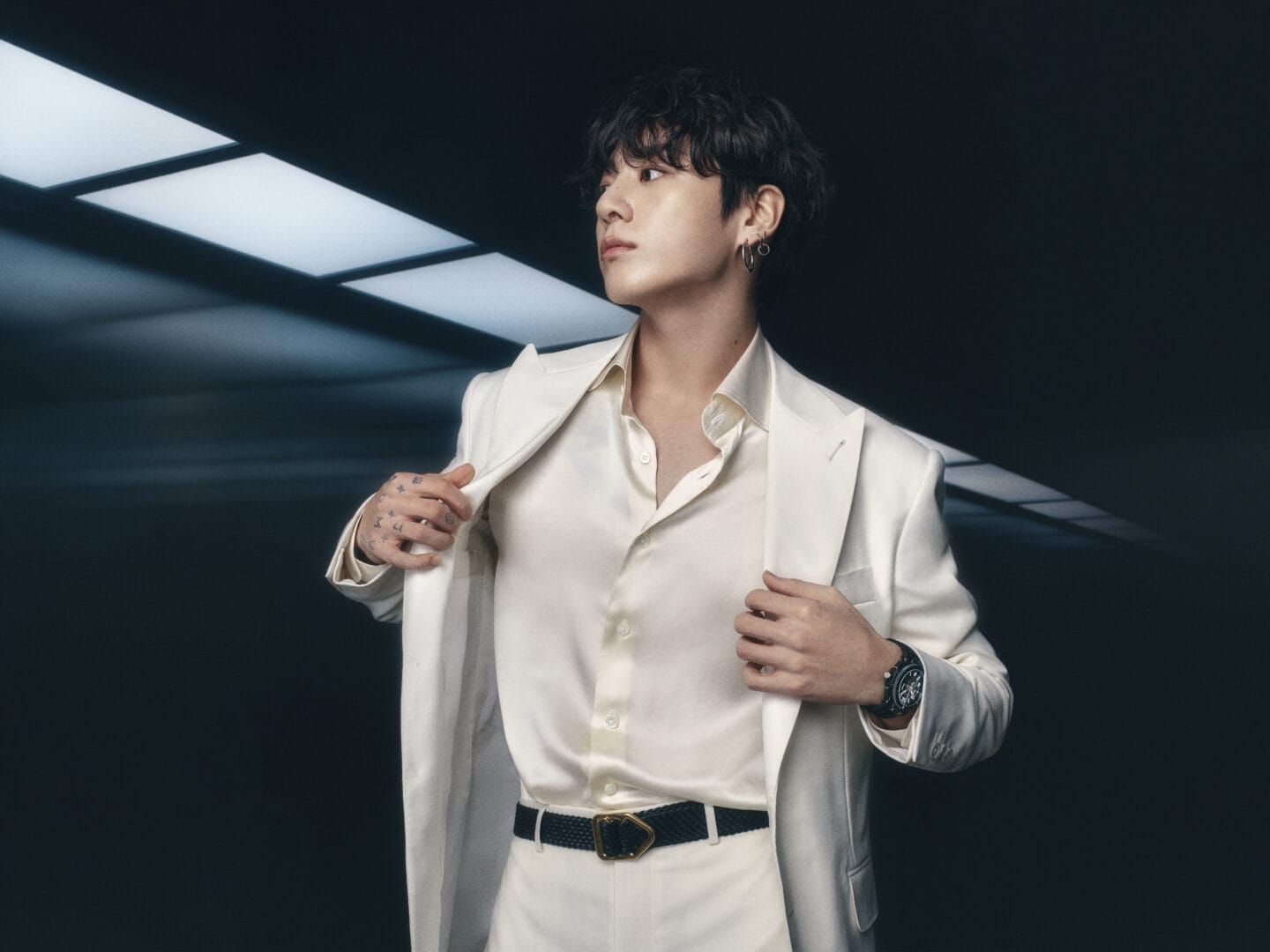
This is precisely why the appointment of Jung Kook as global ambassador is not just another celebrity deal—it is a strategically precise move.
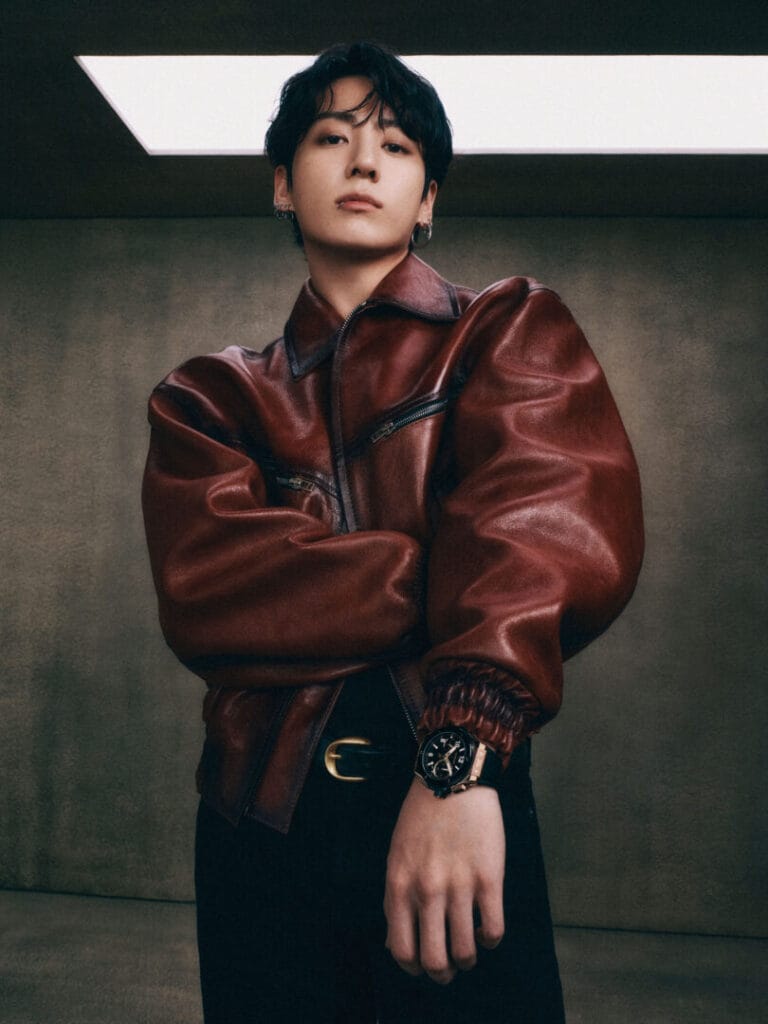
Enter Jung Kook: A Global Cultural Force
Jung Kook is not simply a pop star. He is one of the most influential entertainment figures of his generation and a central member of the global phenomenon BTS.
To understand why this partnership matters, you have to understand scale.
Jung Kook commands tens of millions of followers across social platforms, with engagement rates that most luxury brands can only dream about. His audience is young, digitally native, and globally distributed—particularly strong across Asia, North America, and Latin America. In other words, he reaches precisely the demographics luxury watchmakers are aggressively trying to capture.
But numbers alone don’t explain the strategic fit.
What makes Jung Kook uniquely powerful is his multidimensional appeal. He is:
- Musically credible
- Visually iconic
- Cross-culturally fluent
- Fashion forward
- Performance driven
In luxury marketing terms, this is what I call a high-elasticity ambassador—someone whose influence travels seamlessly across categories, geographies, and price tiers.
The South Korea Effect
Any serious analysis must also consider geography. South Korea has become one of the most important cultural export engines in the world. Over the past decade, K-pop, K-drama, and Korean fashion have reshaped global youth culture in ways that would have seemed improbable twenty years ago.
“South Korea’s cultural engine has become one of the most strategic pipelines for the luxury watch industry. Today’s top maisons understand that K-pop ambassadors don’t just model timepieces—they mobilize vast, digitally native fan economies that convert attention into measurable demand. With social media penetration in Korea exceeding 90% and a majority of luxury buyers influenced online, aligning with Korean global stars is no longer experimental; it’s essential future-proofing for relevance, reach, and revenue.” — Joseph DeAcetis, Editor at StyleLujo.com and Professor at the Fashion Institute of Technology
From a luxury watch perspective, South Korea represents three critical opportunities:
- A hyper-digital consumer base
- Strong appetite for status luxury
- Massive global cultural amplification
When a Korean superstar moves the needle, the ripple effect is immediate and international. I have watched this dynamic accelerate year after year, and brands that ignore it do so at their own risk.
Hublot clearly understands this landscape.
Why the Big Bang Original Unico Fits the Moment
The relaunch of the Big Bang Original Unico in 2026 is not happening in a vacuum. The model carries two decades of brand equity, but more importantly, it embodies Hublot’s core philosophy: visible mechanics, architectural layering, and unapologetic presence on the wrist.
In my professional assessment, the watch aligns with Jung Kook on three key levels:
Precision and Performance
Jung Kook is known for disciplined, high-energy performances. The Unico movement—Hublot’s in-house chronograph caliber—signals mechanical seriousness that supports that narrative.
Visual Impact
This is not a quiet dress watch. The Big Bang design language is bold, modern, and instantly recognizable—qualities that mirror Jung Kook’s stage persona.
Evolution Narrative
Perhaps most importantly, both the artist and the watch represent continuous evolution. Since his 2013 debut, Jung Kook has consistently expanded his artistic range. Similarly, the Big Bang platform has been iterated, refined, and re-engineered over two decades.
This is what strong luxury alignment looks like when executed properly.
The Psychology Behind the Partnership
From my vantage point covering the watch sector for over thirty years, the most effective ambassador relationships share one trait: authenticity of energy, even if the partnership itself is commercially engineered.
Consumers today are extraordinarily sophisticated. They can detect forced collaborations instantly. What works—and what Hublot appears to be betting on—is emotional coherence between product and personality.
Jung Kook represents:
- Discipline
- Youthful power
- Global connectivity
- Creative evolution
Hublot represents:
- Technical audacity
- Material innovation
- Bold aesthetics
- Cultural confidence
The overlap is clear.

and member of 21st century pop icons, BTS, as its new Global Brand Ambassador.
What This Signals for the Future of Luxury Watches
We are entering a new phase of luxury watch marketing—one where mechanical excellence is assumed but cultural relevance is the true battleground.
Looking ahead, I expect three major shifts:
1. Ambassador ecosystems will become more data-driven.
Brands will increasingly analyze follower demographics, engagement heat maps, and cross-market conversion before signing talent.
2. Asia will drive ambassador strategy.
Not just China—but South Korea, Southeast Asia, and India will shape the next decade of luxury growth.
3. Personality-product alignment will tighten.
The era of random celebrity endorsements is fading. Strategic coherence will separate winners from laggards.
Final Word
After more than three decades covering the luxury watch industry, I can say with confidence that the Jung Kook partnership represents a textbook example of modern luxury strategy done right. It honors Hublot’s disruptive DNA while positioning the brand squarely inside the global youth conversation.
In today’s market, precision engineering may build the watch—but cultural electricity sells it.
And right now, Hublot has both ticking in perfect sync.
Save Article