
As someone who has watched decades of red carpet fashion evolve, there’s a particular thrill in witnessing menswear claim its rightful spotlight. For years, the Oscars were a stage dominated by tradition: black tuxedos, polished shoes, and neatly tied bow ties. But as we step into 2026, the narrative has shifted dramatically. Menswear has transformed from mere formalwear into an expression of personality, cultural commentary, and brand storytelling, all amplified by the relentless reach of social media.
This year, walking into the Dolby Theatre in Los Angeles felt less like entering a ceremony and more like attending a global style showcase. The digital cameras, live streams, and Instagram feeds broadcasted every detail instantly, creating a virtual audience far larger than any physical one in the theater. Today, a single outfit can reach tens of millions worldwide within minutes, making the Oscars not only a celebration of cinematic achievement but also a strategic marketing platform for menswear designers.
From Timeless Tradition to Modern Innovation
Historically, Oscars menswear leaned on a strict code: black tie, midnight blue, and the occasional patterned silk pocket square. Icons like Paul Newman and Cary Grant defined an era where subtlety and fit spoke volumes. Fast forward to 2026, and subtlety shares the stage with bold experimentation. This year, we saw a spectrum that ranged from classic Italian tailoring to experimental silhouettes, vibrant hues, and couture-inspired layering that would have been unthinkable a decade ago.
Take, for instance, the trend of colored velvet blazers. Once considered theatrical, these pieces now dominate the red carpet, reflecting a confidence in color and texture that signals a departure from conservative norms. Designers are no longer constrained by “what has always worked”—the audience, both in-person and digital, craves surprise and individuality.
A noticeable trend at the 2026 Oscars was the prevalence of double-breasted tuxedos among male attendees, reimagined with modern lines, innovative cuts, and fresh fabrications. Designers moved beyond traditional, rigid forms, favoring fluid tailoring that balances structure with ease, allowing the silhouette to appear effortless yet polished. Fabrics ranged from lightweight wool blends to textured velvets, introducing depth, movement, and a tactile richness that elevates the classic double-breasted style. This approach demonstrates a sophisticated evolution in menswear: the double-breasted jacket is no longer purely formal or constrictive—it becomes a versatile statement of confidence and modern elegance, reflecting both craftsmanship and a contemporary understanding of red carpet presence.
The Social Media Amplifier
One cannot discuss 2026 Oscars menswear without acknowledging the sheer power of digital platforms. Instagram, TikTok, and Twitter now operate as accelerators for designer visibility. Every tailored jacket, statement cufflink, or bespoke pattern is captured, shared, and critiqued instantly. Brands that previously relied solely on traditional marketing now see the Oscars as an unparalleled ROI opportunity.
For emerging menswear designers, this exposure is transformative. A single well-documented red carpet appearance can generate millions of impressions, translating to both sales and brand credibility. Legacy brands also reap benefits, leveraging star placements to reinforce cultural relevance. For example, this year, several attendees opted for lesser-known atelier pieces paired with high-impact accessories, a combination that sparked viral conversations online. In an era where one viral image can define a brand’s trajectory, menswear has become a central piece in digital marketing strategies.
The Oscars as a Menswear Benchmark
It’s fascinating to observe how these events function as trend incubators. Oscar attendees are no longer just stars—they are brand ambassadors and tastemakers. The choices they make dictate trends, from tailoring silhouettes to footwear, fabrics, and even jewelry. Social media ensures that these choices are quickly documented, analyzed, and replicated by fashion-conscious men around the world.
Consider the rise of accessories as focal points. Pocket chains, artisan brooches, and avant-garde cufflinks have transitioned from niche interest to mainstream statement. In 2026, menswear designers understand that these details are not just decorative—they are conversation starters. And in the age of digital virality, conversations are currency.
A Personal Take on This Year’s Highlights
From my vantage point as a fashion editor, several standout moments defined the 2026 Oscars menswear landscape. One of the most striking was the fusion of traditional tailoring with contemporary artistic flair. Crisp tuxedos with asymmetrical lapels, metallic embroidery, and unexpected textures demonstrated that menswear is no longer about playing it safe. The boldness is both a nod to individuality and a strategic move for designers seeking attention in an overcrowded digital marketplace.
Equally impressive was the prominence of gender-fluid tailoring. Several male attendees embraced silhouettes traditionally associated with women’s fashion—flowing fabrics, intricate pleating, and layered ensembles—without sacrificing elegance. It’s a clear signal that 2026 menswear is about freedom of expression, reflecting broader cultural movements and influencing commercial design in real time.
The Strategic Importance for Brands
For menswear labels, Oscars appearances now function as multi-channel marketing campaigns. Every photograph becomes content for social media, press releases, and e-commerce storytelling. Designers can track engagement, analyze sentiment, and optimize product launches around the exposure. Unlike traditional advertising, this is authentic, editorial-level marketing that blends cultural capital with commerce.
Take the example of the designers who dressed breakout stars this year. Their work wasn’t just featured on a static red carpet—it was dissected in fashion roundups, posted in TikTok breakdowns, and analyzed by influencers worldwide. The outcome? Immediate demand, increased brand awareness, and a perception of cultural relevance that can take years to cultivate through conventional campaigns.
Trends That Will Define 2026 Menswear
Several recurring themes at this year’s Oscars indicate where menswear is heading:
- Vibrant Colors & Textures: From deep jewel tones to iridescent fabrics, color is reclaiming menswear from decades of monotone tradition.
- Statement Outerwear: Capes, oversized coats, and structured jackets made bold entrances, signaling a shift from minimalist layering to expressive outerwear.
- Sustainable Luxury: A number of attendees wore bespoke pieces made from recycled or responsibly sourced fabrics—a nod to environmental responsibility without compromising style.
- Accessorized Detailing: Watches, pins, chains, and rings were no longer afterthoughts but integral components of the outfit, reflecting a holistic design approach.
- Gender Fluidity & Layering: Blending traditional masculine cuts with flowing, almost ethereal elements signaled the democratization of style and the breaking of fashion binaries.
These trends are not fleeting—they offer designers a blueprint for both red carpet impact and retail relevance. Menswear is evolving, and the Oscars are now a key platform in shaping perception and influencing global demand.
The Digital Lens: How Millions Engage
This year, the global audience for Oscars fashion is exponentially larger than the live audience. Digital streaming platforms, social feeds, and real-time coverage mean that a tailored suit seen on one star can inspire international fashion weeks, viral TikTok challenges, and influencer collaborations. For brands, this visibility translates into data-driven opportunities: which colors perform best, which silhouettes generate conversation, and which accessories are most shared online. Menswear design is no longer just creative—it’s strategic, analytical, and digitally informed.
Why This Matters for Menswear Designers
Red carpet appearances are no longer optional; they are essential. Designers understand that in 2026, a single Oscars look can define seasonal trends, boost e-commerce engagement, and elevate brand perception. In a landscape dominated by Instagram stories, TikTok snippets, and 24/7 social feeds, traditional advertising can’t compete with the authenticity and reach of a live red carpet moment.
Moreover, menswear is experiencing a renaissance. For years, the industry was overshadowed by women’s fashion in terms of media attention and trend-setting power. Now, thanks to bold choices, digital amplification, and star power, menswear occupies its own influential space. Brands that embrace creativity, invest in unique storytelling, and leverage social media as a force multiplier are reaping the benefits in real-time.
A Personal Perspective on the Evolution
As a fashion editor who has witnessed the slow transformation of menswear from formal rigidity to expressive freedom, the 2026 Oscars feel like a pivotal moment. There’s a sophistication in risk-taking that wasn’t present a decade ago, and an awareness of how every detail—fit, fabric, accessory, silhouette—translates in the digital age. For me, this isn’t just reporting; it’s participation in a cultural evolution. Observing how young designers are leveraging this exposure, seeing emerging trends crystallize in real-time, and analyzing the interplay between celebrity influence and digital virality is exhilarating. Menswear has arrived as a dynamic, forward-thinking, and commercially potent force—and the Oscars are the ultimate proving ground.
As the world’s eyes turned to Hollywood for the 2026 Oscars, menswear emerged not just as a complement to cinematic glamour, but as a commanding statement in its own right. From bold tailoring and vibrant textures to innovative silhouettes and statement accessories, the red carpet became a dynamic showcase of creativity, personality, and style authority. Every detail mattered—and thanks to social media, these looks reached millions of viewers instantly, transforming each appearance into a cultural moment. Below, StyleLujo.com presents our curated list of the most standout menswear looks from this year’s Oscars, celebrating the designers, the stars, and the trends that are shaping the future of men’s fashion.
Channing Tatum wore Versace:
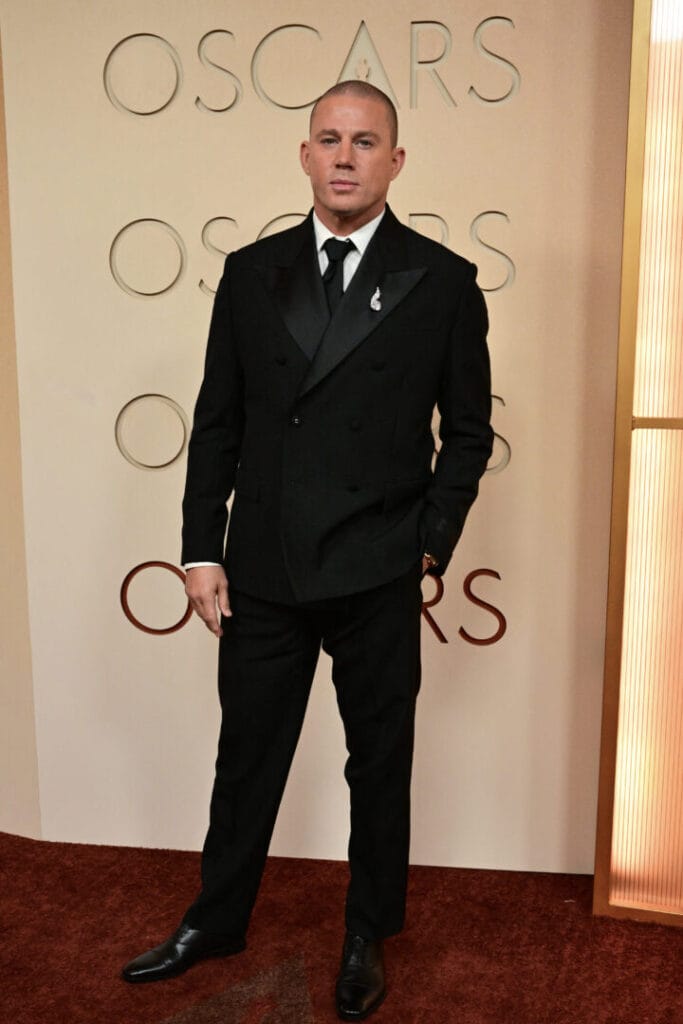
American actor Channing Tatum, attending the 98th Academy Awards to celebrate his role in the critically acclaimed film Boundless Horizons, made a commanding red carpet appearance in Versace. He wore a double-breasted wool and mohair blend blazer with peak lapels finished in duchesse satin, exemplifying a refined balance of structure and luxury. The clean tailoring and understated design allowed Tatum’s presence to remain the focal point, while the peak lapels and satin detailing provided subtle sophistication. This ensemble demonstrates polished menswear sensibility, highlighting how a classic, well-executed silhouette can communicate elegance and red carpet authority without relying on excessive embellishment.
Miles Caton wore AMIRI:
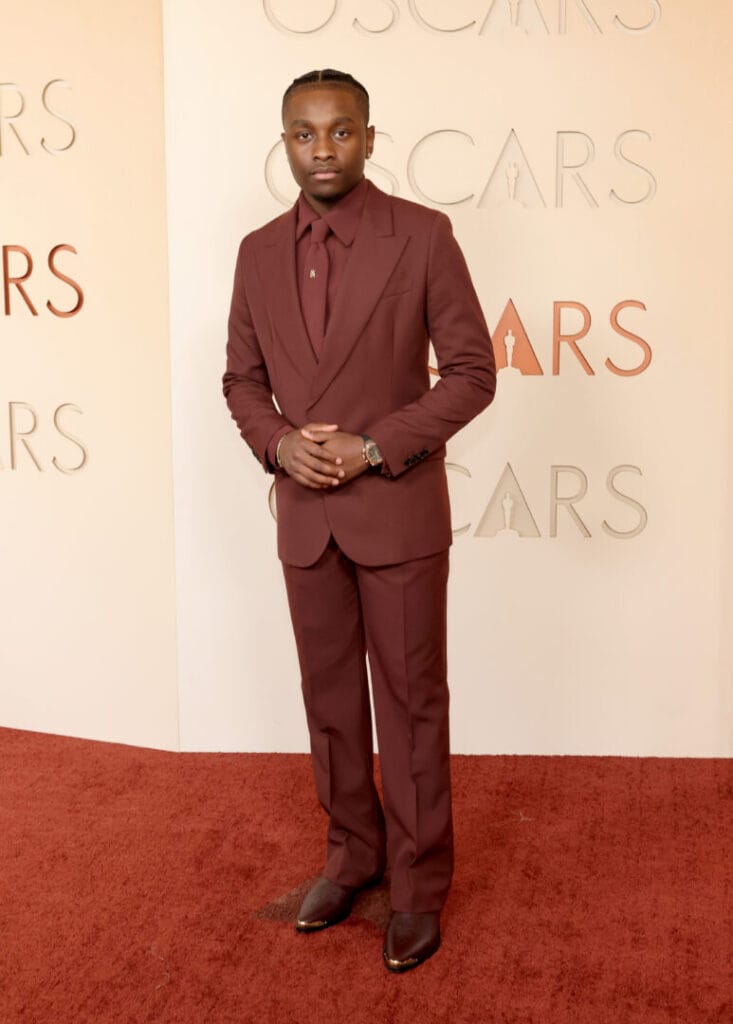
American actor Miles Caton, recognized this year for his role in Eclipse of Tomorrow, made a polished appearance at the 98th Academy Awards in custom AMIRI tailoring. The deep plum single-breasted jacket layered over a matching shirt and tie created a streamlined, cohesive silhouette, while MA Fit trousers maintained clean tailoring and proportion. Completing the look, the leather MA pointy boots added a modern finish that complemented the tonal palette. Caton’s outfit demonstrates a refined understanding of color coordination and contemporary tailoring, presenting a red carpet-ready look that balances sophistication with subtle personality, perfectly suited to his status as one of this year’s celebrated actors.
Miles Caton’s custom AMIRI look at the 98th Academy Awards shows strong tailoring and attention to detail, but the monochromatic plum palette works against the red carpet rules of menswear. Ideally, the eye should be drawn first to the actor’s face, with the clothing enhancing their presence. Here, the uniform tone causes the suit to dominate visually, meaning the actor registers second. While the pieces have potential, the styling underlines how critical contrast and layering are in creating a polished, red carpet-ready menswear statement.
Milo Manheim wore GapStudio:
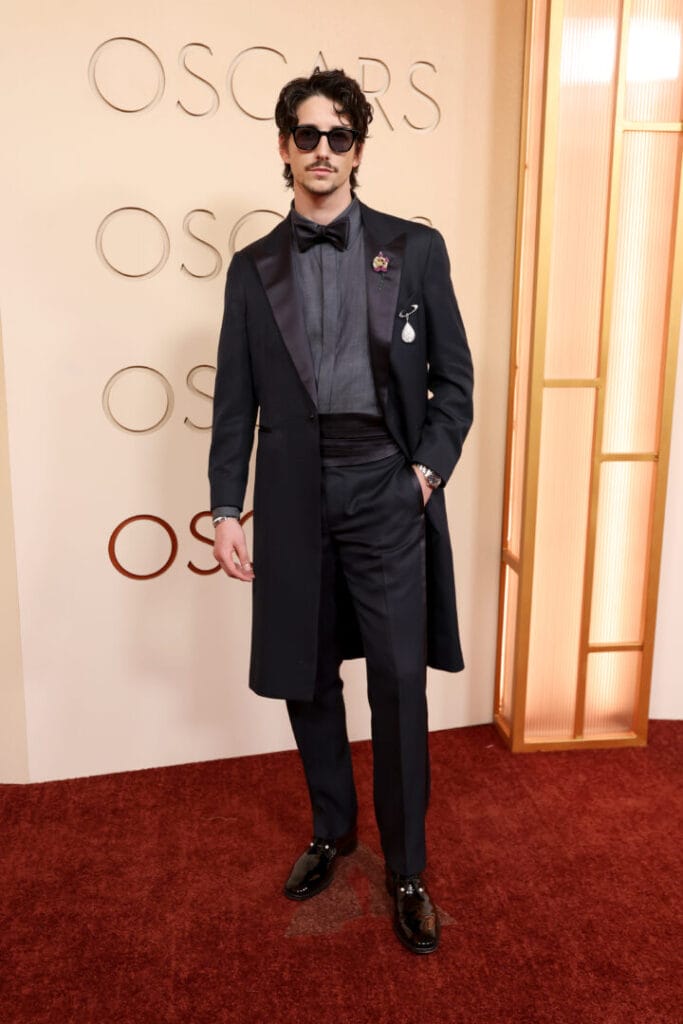
American actor Milo Manheim, attending the 98th Academy Awards to celebrate his breakout role in Starlight Horizon, wore a custom GapStudio tuxedo designed by Zac Posen, Gap Inc.’s Executive Vice President and Creative Director. The ensemble features a midnight wool cavalry twill jacket elongated into a sleek coat-length silhouette with silk faille lapels, paired with a chambray shirt that references Gap’s heritage of elevated everyday essentials. Matching trousers, a satin duchesse bow tie, and a coordinating cummerbund complete the look, blending classic black-tie elegance with contemporary American tailoring. Manheim’s outfit demonstrates refined attention to proportion, texture, and heritage-inspired detailing, offering a polished, modern red carpet presentation that balances sophistication with youthful approachability.
Chase Stokes wore dunhill:
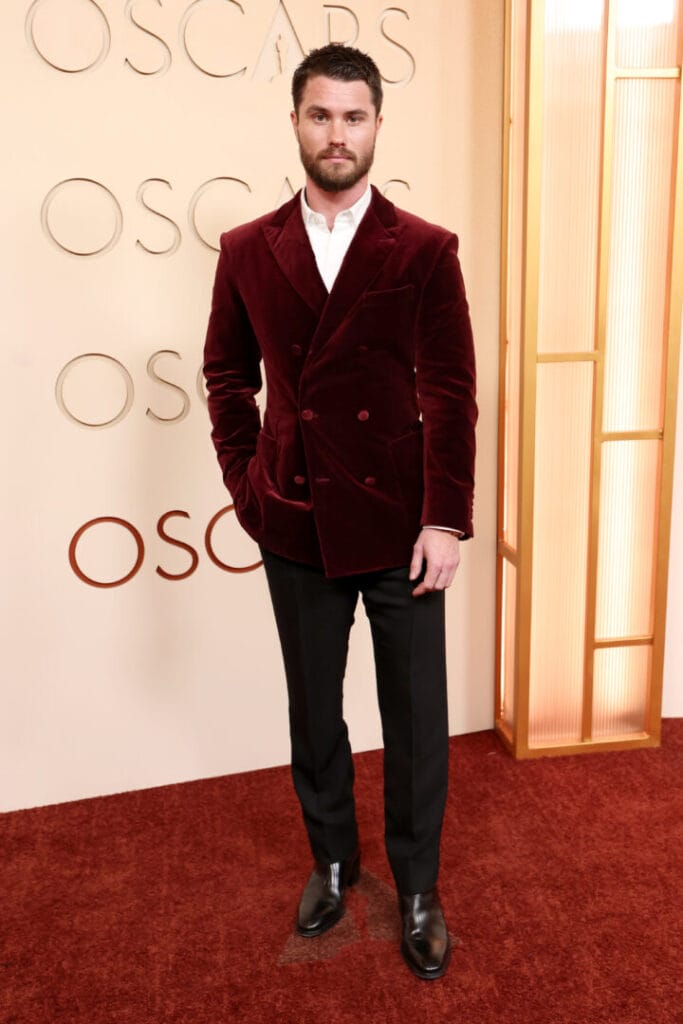
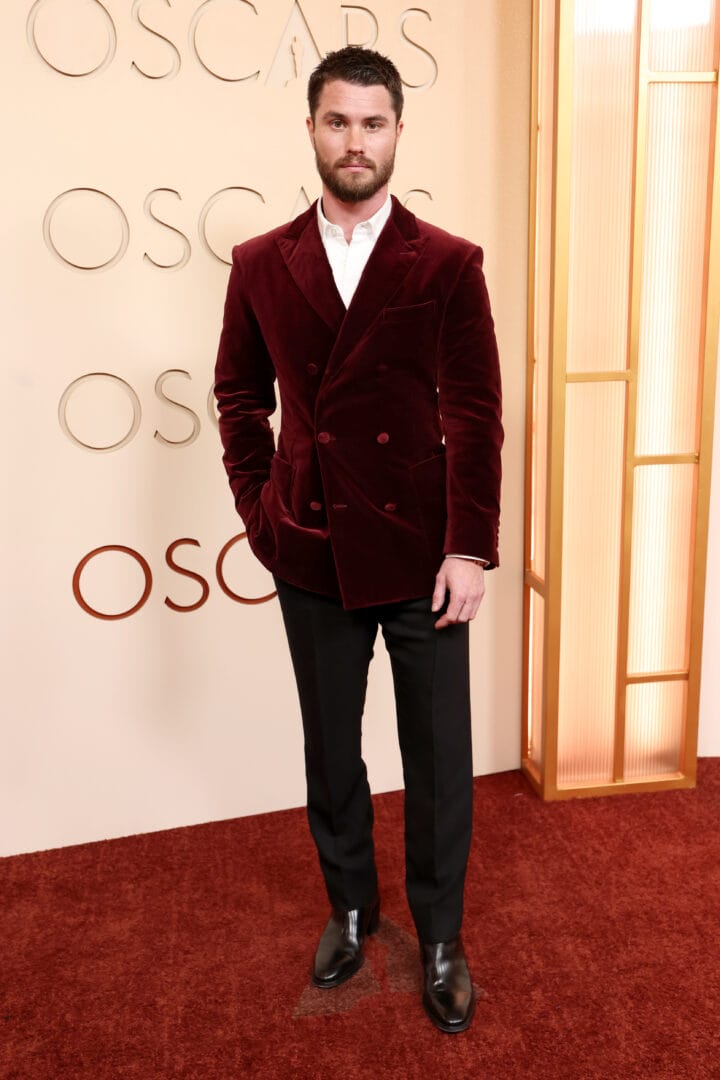
American actor Chase Stokes, nominated for his performance in The Last Horizon, made a striking appearance on the 2026 Oscars red carpet in a Dunhill Autumn Winter 2026 ensemble. The deep red cotton velvet Bourdon high-break peak lapel double-breasted jacket immediately commands attention, while the crisp white cotton contrast point collar evening shirt with round bib and tailored black wool barathea double-pleated evening trousers provide perfect structure and balance. Stokes’ look demonstrates a sophisticated command of color, texture, and proportion, presenting a polished, red carpet-ready interpretation of modern menswear that complements his status as one of this year’s most acclaimed actors.
Kleber Mendonça Filho wore ZEGNA:

Brazilian filmmaker Kleber Mendonça Filho, attending the 98th Academy Awards to celebrate his nomination for Best International Feature Film, made a refined red carpet statement in ZEGNA’s 2026 Red Carpet Collection. He wore a black wool peak lapel tuxedo paired with a white silk covered-button shirt, a classic black bow tie, and polished Vienna evening shoes, achieving a timeless, impeccably tailored silhouette. Mendonça Filho’s look exemplifies the enduring power of understated elegance, where precision in fit, proportion, and fabric selection allows the wearer’s presence and professional stature to remain front and center. This ensemble reinforces ZEGNA’s reputation for modern luxury and highlights the effectiveness of classic menswear codes on a global red carpet stage.
Will Arnett wore Allen EdmondsDress Loafer:
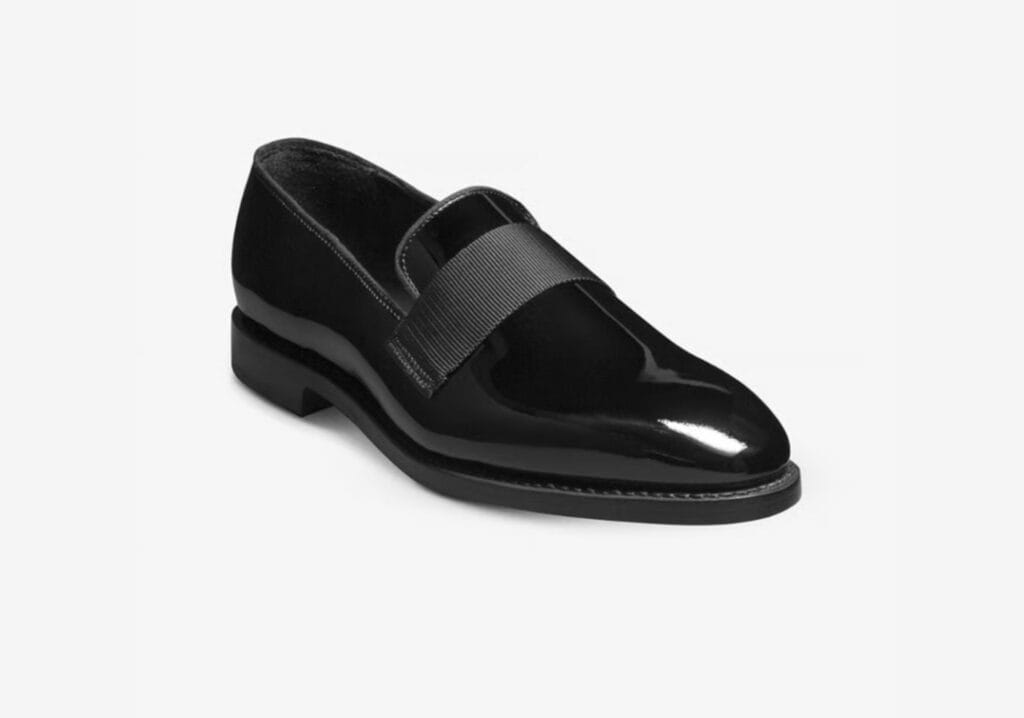
Actor Will Arnett stepped onto the stage at the 98th Academy Awards in polished style, wearing the Allen Edmonds James Dress Loafer while presenting the award for Best Animated Feature Film. The sleek leather loafer offered a refined alternative to traditional lace-up evening shoes, balancing comfort with classic red carpet sophistication. Retailing for $450, the James Dress Loafer reflects the enduring craftsmanship associated with Allen Edmonds, demonstrating how understated footwear can complement formal tailoring while maintaining a polished, stage-ready presence at one of Hollywood’s most visible events.
Conclusion: Redefining Menswear for a Global Audience
The Oscars have evolved beyond a film awards ceremony—they are now a menswear showcase that shapes global trends, defines designer relevance, and leverages digital amplification like no other event. From classic tailoring to experimental silhouettes, from bold colors to gender-fluid expressions, the 2026 red carpet illustrates that menswear is not only keeping pace with contemporary culture—it is setting it.
For brands, designers, and marketers, the takeaway is clear: every Oscar look is a strategic opportunity. For audiences, it’s a masterclass in style. And for me, it’s a reminder that menswear, long undervalued in the broader fashion narrative, has stepped confidently into the spotlight—bold, nuanced, and infinitely engaging.
The Oscars in 2026 are not just an awards ceremony—they are a menswear manifesto, amplified by social media, witnessed by millions, and shaping the future of fashion.
Save Article