
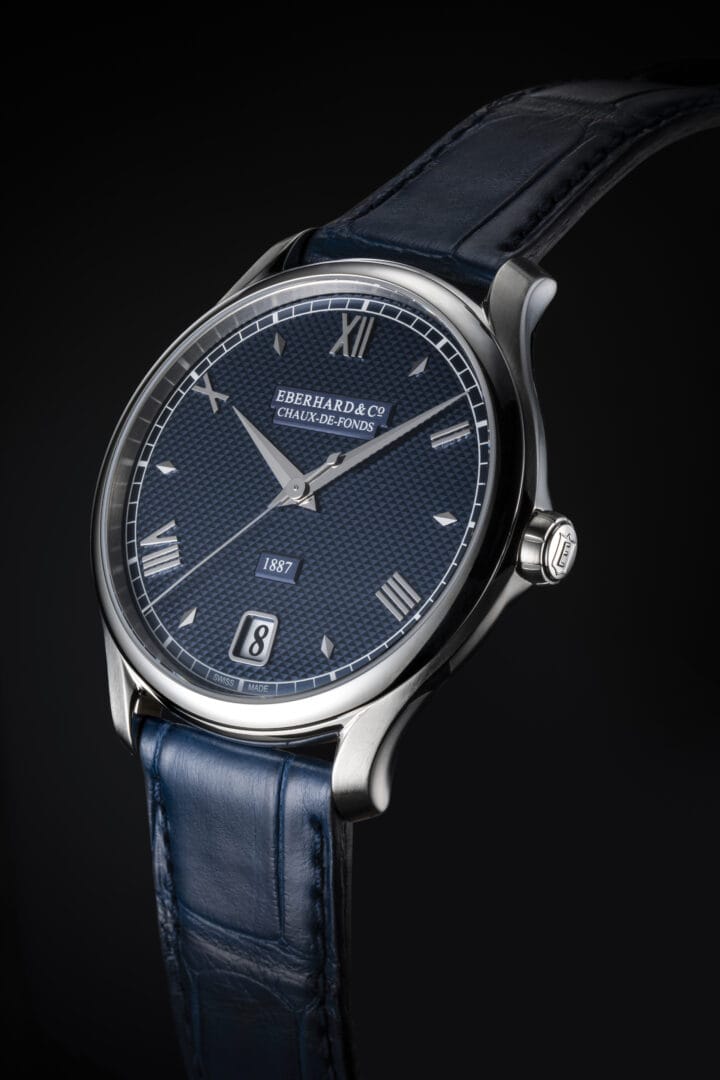
Clous de Paris: A Miniature Architecture on the Dial
In an era when luxury watchmaking is racing toward ever more technical complications and bold case designs, the real revolution is happening somewhere far more subtle: on the dial surface itself. For 2026, the spotlight shifts to one of horology’s most poetic decorative arts—the Clous de Paris guilloché—reinterpreted with striking modern intent by Eberhard & Co.
Founded in 1887 in La Chaux-de-Fonds, Switzerland, Eberhard & Co. quickly established itself as a technically driven independent manufacture known for precision chronographs and refined mechanical watchmaking. Under the leadership of Georges Eberhard and later the Palmisano family, the Maison built a reputation for innovation—most notably in chronograph development—while preserving a strong commitment to traditional Swiss craftsmanship. Throughout the 20th century, the brand became closely associated with professional timing instruments and elegant sport watches, and today it continues to balance heritage design codes with contemporary mechanical expertise, maintaining its rare status as a family-owned Swiss watchmaker.
The Maison’s latest direction proves a powerful truth in contemporary watch culture: refinement is no longer quiet—it is strategic. And the Clous de Paris motif, long associated with classical elegance, is being repositioned as a dynamic design language capable of energizing both heritage dress watches and performance-driven chronographs.
At its core, Clous de Paris is more than a decorative flourish. It is, quite literally, miniature architecture on the dial.
The Geometry That Captures Light
The Clous de Paris finishing is a traditional guilloché technique widely respected in high watchmaking. Its signature lies in a surface composed of tiny, three-dimensional pyramid-shaped reliefs arranged in precise, rhythmic repetition.
But what makes this pattern extraordinary is not simply its geometry—it is its relationship with light.
Each micro-facet of the pyramids acts as a reflective plane. As the wrist moves, light fractures and recomposes across the dial, creating a living surface that evolves continuously with the viewing angle. The result is a dial that feels kinetic without any mechanical motion, structured yet vibrantly alive.
Think of it as architectural design at the micron level:
- Highs and lows create depth
- Rhythmic repetition establishes order
- Light play injects energy
This interplay transforms the dial into something experiential rather than merely decorative. The watch does not just tell time—it performs visually.
Why the Industry Is Paying Attention Now
For decades, Clous de Paris was largely confined to formal, conservative timepieces. Today’s luxury consumer, however, is demanding something more nuanced: heritage credibility paired with contemporary edge.
“Clous de Paris is experiencing a powerful renaissance because today’s sophisticated collector is no longer satisfied with surface-level design—they are demanding micro-architectural depth and authentic métiers d’art on the dial. This historic guilloché, with its precise hobnail geometry and dynamic light refraction, delivers exactly what the modern luxury watch market craves: tactile refinement, visual movement, and heritage credibility in a single execution. In an era defined by quiet luxury and elevated finishing, Clous de Paris signals connoisseurship rather than ostentation, making it one of the most relevant dial treatments of the moment.” — Joseph DeAcetis, Editor at StyleLujo.com and Professor at the Fashion Institute of Technology
This is precisely where Eberhard & Co. is positioning its latest work.
The brand’s approach reflects several macro trends shaping the watch market heading into 2026:
Texture is the new complication.
Collectors increasingly value tactile and visual sophistication as much as mechanical complexity.
Heritage must feel dynamic.
Traditional finishes are being reinterpreted to avoid appearing static or overly formal.
Versatility defines modern luxury.
Today’s buyer expects one watch to move fluidly between tailoring and sport.
Clous de Paris, when executed with intention, checks every one of these boxes.
The 1887 Collection: Heritage Reawakened
Within the 1887 collection—powered by the Maison’s exclusive calibres—the Clous de Paris motif reinforces a classical identity rooted in the brand’s historical research.
This is not nostalgia for its own sake. It is controlled revivalism.
The pattern provides structural discipline to the dial while maintaining visual softness through light play. The effect is especially compelling in the 1887 Remontage Manuel, where the finish takes center stage in white or blue.
Here, the design language leans deliberately retro:
- Refined dial architecture
- Trapezoidal date window
- Balanced vintage proportions
Yet the Clous de Paris texture prevents the watch from feeling archival. Instead, it injects a subtle modern vibration that keeps the piece relevant for today’s collector.
In many ways, this model demonstrates the Maison’s strategic thesis: heritage must move.
When Precision Meets Complexity: Chronographe 1887 Automatique
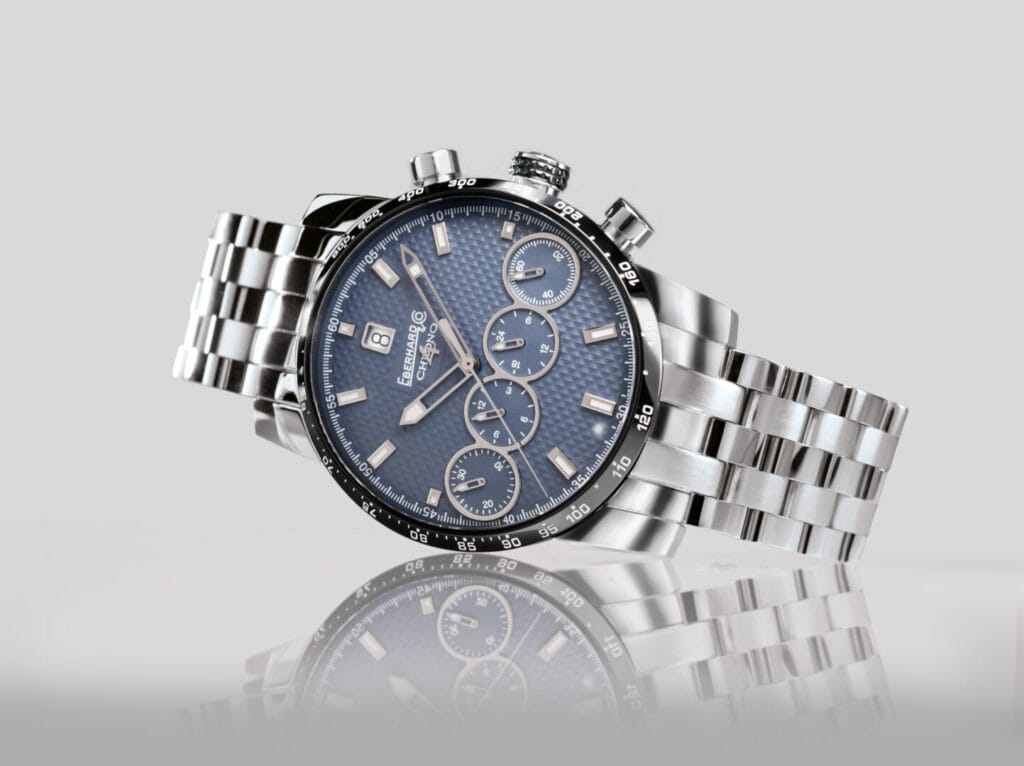
The conversation deepens in the two Chronographe 1887 Automatique models, where the Clous de Paris dial appears in argenté or blue.
These watches already possess layered visual architecture through their chronograph layout. Introducing Clous de Paris could have risked visual overload—but instead, the opposite occurs.
Why it works:
- The geometric base pattern establishes order
- Matching-color subdials maintain cohesion
- Azuré finishing on the counters introduces contrast
The azuré subdials—distinguished by their circular brushed texture—interrupt the pyramid grid just enough to create visual tension. This controlled friction between finishes amplifies the sensation of movement across the dial.
The result is sophisticated visual choreography. Nothing feels accidental.
For the modern luxury consumer, this is exactly the sweet spot: complexity that remains legible, decorative richness that never becomes noise.
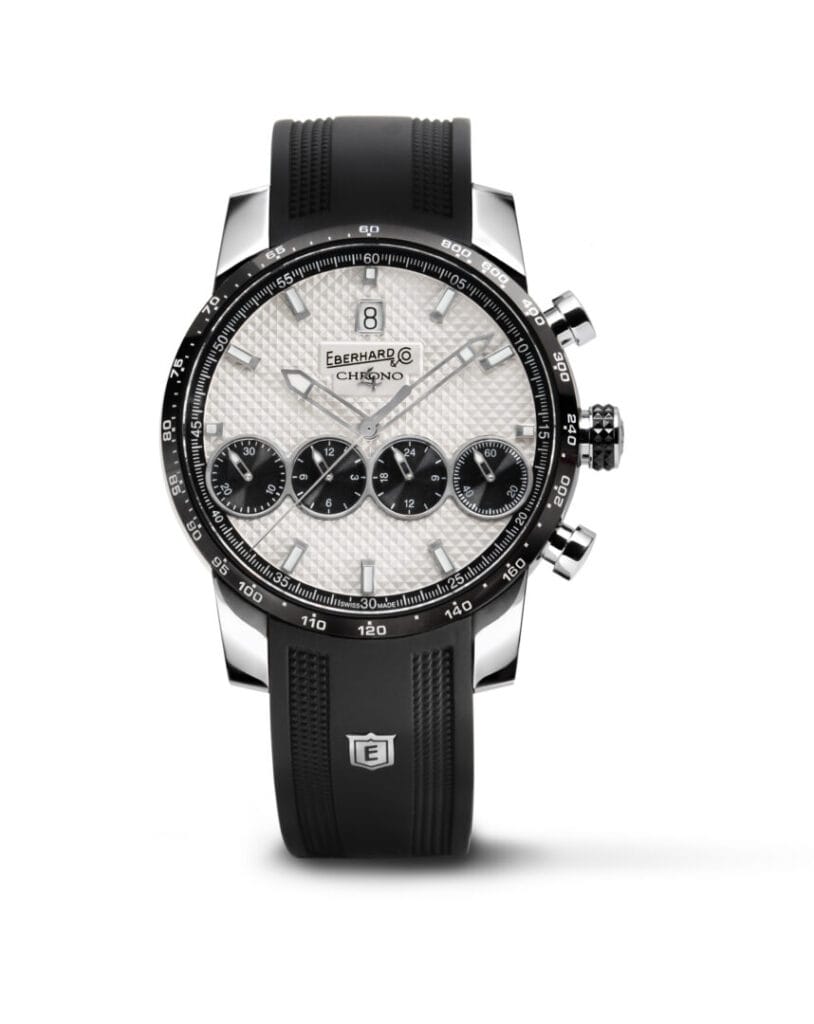
The Sport Surprise: Chrono 4 “21-42”
Perhaps the most compelling evolution of Clous de Paris appears where few traditionalists would expect it—on sporty timepieces.
On models such as the Chrono 4 “21-42,” the finish shifts roles entirely. Rather than serving as the star of a dress dial, it becomes a textured stage set behind one of the brand’s most recognizable signatures: four horizontally aligned counters.
This is where Eberhard & Co. demonstrates real design confidence.
Key visual dynamics include:
- The Clous de Paris grid as structured backdrop
- Polished counter edges that cut through the pattern
- Azuré finishing that adds circular motion
- A ceramic bezel that introduces modern sport energy
The effect is unexpectedly bold.
What was once considered a purely elegant guilloché now reads as athletic, technical, and contemporary. The geometric surface grounds the dial, while the horizontal chronograph layout delivers forward momentum.
In today’s market—where sport-luxury hybridity dominates—this reinterpretation feels particularly timely.

Light as a Design Material
What ultimately elevates the Clous de Paris execution across these models is the Maison’s understanding of light as an active design component.
Many brands apply guilloché as static decoration. Here, the finishing is treated more like optical engineering.
As the wearer moves:
- Reflections sharpen
- Shadows deepen
- Surfaces appear to shift
The watch effectively changes personality throughout the day—much like a building that reveals different moods from morning to dusk.
This is why the “miniature architecture” analogy is so apt. The dial is not merely patterned; it is constructed.
For collectors increasingly sensitive to nuance, this level of visual intelligence matters.
The Strategic Importance of 2026
All signs point to Clous de Paris becoming a central talking point when Watches and Wonders Geneva opens its doors in 2026.
Why this matters:
- The industry is pivoting back toward artisanal finishing
- Consumers are scrutinizing dial craftsmanship more closely
- Brands are seeking heritage codes that can be modernized
By positioning Clous de Paris as the protagonist of an upcoming novelty preview, Eberhard & Co. is effectively placing a strategic bet: that surface sophistication will be one of the next great battlegrounds in luxury watchmaking.
Given current collector sentiment, it is a smart wager.
What This Means for the Luxury Watch Consumer
For today’s buyer—particularly the style-driven luxury menswear audience—the renewed focus on dial architecture signals a broader shift.
We are entering an era where:
- Understated detail carries more status than overt flash
- Craft storytelling matters at the microscopic level
- Texture communicates luxury as powerfully as materials
Clous de Paris embodies all three.
It offers:
- Heritage credibility
- Visual dynamism
- Cross-category versatility
Most importantly, it rewards close looking—the ultimate luxury behavior.
The Quiet Power of Surface Mastery
If the past decade of watch design was dominated by size, color experimentation, and material innovation, the next phase appears to be moving inward—toward surfaces, textures, and optical depth.
In that context, the Clous de Paris revival feels less like a nostalgic gesture and more like a calculated evolution.
By treating the dial as architectural terrain rather than flat real estate, Eberhard & Co. is aligning itself with where sophisticated collecting is headed: toward pieces that reveal more the longer you live with them.
And that may be the most compelling luxury proposition of all.
Watch the dial. In 2026, the smallest pyramids in Swiss watchmaking may cast the longest shadow.
Save Article