

In 2026, corduroy is experiencing one of the most surprising and commercially significant reinventions in the fabric’s long and storied life. Once relegated to the nostalgic corners of fall wardrobes and academic uniforms, corduroy has undergone a wave of technical and stylistic modification that has opened the door to an entirely new customer segment. Today’s consumer—digitally savvy, fit-focused, and personalization-driven—is discovering a material that feels dramatically different from the corduroy of decades past.
The transformation is not accidental. Advances in textile engineering, fiber blending, and precision tailoring have elevated corduroy into what industry insiders are increasingly calling Corduroy 5.0—a new generation defined by lighter weight, sharper silhouettes, and modern versatility. What was once perceived as heavy, rigid, and boxy has evolved into a refined fabric capable of delivering both comfort and polish.
Most importantly, the fabric’s renaissance is aligning perfectly with a broader shift in consumer behavior. In an era where shoppers are prioritizing individuality, tactile richness, and season-spanning utility, corduroy’s ribbed texture offers visual depth that flat weaves simply cannot match. The result is a meaningful expansion of corduroy’s audience—from traditional heritage buyers to younger, style-forward consumers seeking differentiation in a crowded market.
A Fabric With Deep Roots
To understand why corduroy’s return matters in 2026, it helps to revisit its origins. Corduroy traces its lineage back several centuries, with roots commonly linked to England and France. The fabric evolved from fustian textiles produced in medieval Europe, but it was in 18th-century England, particularly in textile centers like Manchester, where corduroy as we recognize it began to take shape.
The name itself is often associated with the French phrase “corde du roi” (cloth of the king), though historians debate the accuracy of this origin story. Regardless of the exact etymology, by the late 1700s and early 1800s corduroy had established itself as a durable workwear fabric prized for warmth and resilience.
During the Industrial Revolution, mechanized weaving allowed corduroy to be produced at scale. Its ribbed “wale” construction—created by weaving extra sets of fibers and then cutting them into vertical ridges—gave the material both strength and insulation. This made it especially popular among laborers, farmers, and outdoor workers throughout the 19th century.
By the early 20th century, corduroy began its transition from purely utilitarian cloth to mainstream apparel fabric. Universities in the United States embraced corduroy for trousers and sport coats, cementing its association with academia and intellectual culture. The seeds of its fashion identity had been planted.
The Decades That Defined Corduroy
Corduroy’s popularity has always moved in cycles, but several decades stand out as defining moments.
The 1960s and 1970s marked the fabric’s first major fashion peak. As youth culture rejected rigid formalwear, corduroy’s relaxed texture fit perfectly with the era’s casual rebellion. Wide-wale cords, flared trousers, and earthy tones became synonymous with the decade’s aesthetic. Designers embraced the fabric for its tactile richness and countercultural credibility.
The 1980s saw corduroy migrate into mainstream casualwear and preppy wardrobes. While still popular, the fabric began to acquire a reputation for bulkiness. Heavier weights and looser cuts sometimes produced silhouettes that lacked refinement.
The 1990s and early 2000s were more challenging. Minimalism and technical synthetics pushed corduroy to the sidelines. Performance fabrics and lightweight twills felt more aligned with the era’s sleek sensibility. Corduroy never disappeared, but it lost its fashion authority.
Yet fabrics rarely vanish permanently. They wait for the right technological and cultural moment to return. That moment is now.
The Historic Pain Points
For decades, corduroy faced several persistent barriers that limited its appeal among modern consumers:
1. Excessive Weight
Traditional cotton corduroy could feel heavy and restrictive, particularly in tailored garments. This made it less attractive for all-day wear or transitional seasons.
2. Boxy Silhouettes
Older manufacturing methods often produced stiff fabrics that resisted clean drape. The result: jackets and trousers that appeared bulky rather than sculpted.
3. Flattering Challenges
Wide wales and thick piles sometimes added visual volume, making the fabric feel risky for consumers seeking streamlined fits.
4. Seasonal Limitation
Corduroy was strongly associated with cold weather, reducing its year-round versatility in the eyes of shoppers.
5. Limited Customization
Historically, corduroy garments were largely off-the-rack, offering little opportunity for personalization or precision fit.
These issues created friction at retail and contributed to corduroy’s periodic fall from favor. But innovation has rewritten the narrative.
Enter Corduroy 5.0
Today’s corduroy renaissance is driven by meaningful technical upgrades rather than simple nostalgia. Corduroy 5.0 reflects a convergence of textile science, digital tailoring, and modern design thinking.
“Corduroy is experiencing an exciting renaissance in 2026. Modern innovations—from lighter, stretch-infused fabrics to precision tailoring and refined wales—have transformed this classic textile into a versatile, flattering option for both formal and casual wear. Today’s corduroy is no longer bulky or seasonal; it is adaptable, stylish, and personalized, appealing to a new generation of consumers seeking texture, individuality, and modern elegance in their wardrobes.” — Joseph DeAcetis, Editor at Stylelujo.com and Professor at the Fashion Institute of Technology
Key advancements include:
Lighter Fiber Blends
Manufacturers are increasingly incorporating stretch fibers and refined cotton blends that dramatically reduce weight while improving mobility.
Refined Wale Engineering
New weaving techniques allow for micro-wale and mid-wale options that create a smoother visual profile without sacrificing texture.
Improved Drape and Recovery
Modern finishing processes give corduroy a more fluid hand feel, allowing it to behave more like fine suiting fabrics.
Expanded Color Technology
Where corduroy once lived primarily in browns and earth tones, today’s dye processes deliver everything from deep jewel tones to contemporary neutrals.
Made-to-Measure Integration
Perhaps most transformative is the marriage between corduroy and digital customization platforms, which eliminate the fit issues that once plagued the fabric.
Together, these innovations have repositioned corduroy from heritage fallback to forward-looking fashion statement.
Why 2026 Is the Breakout Moment
Several macro trends are converging to fuel corduroy’s surge:
Consumers are craving texture after years of flat minimalism. The tactile richness of corduroy photographs well, performs strongly on social platforms, and adds depth to modern wardrobes.
There is also a growing demand for season-spanning fabrics. Today’s lighter corduroy weights allow the material to move beyond strictly winter use.
Most critically, the market is shifting toward personalization at scale. Off-the-rack sameness is losing ground to brands that offer fit, color, and design control. This is where Sumissura enters the conversation with particular relevance.
Sumissura and the New Corduroy Narrative
Founded in 2011, Sumissura has built its reputation as a leading e-commerce platform for custom clothing for women. The brand’s core proposition—complete design freedom combined with made-to-measure precision—positions it squarely within the personalization movement reshaping fashion retail.
In its latest corduroy offering, Sumissura demonstrates how the fabric can be recontextualized for the modern consumer. Rather than treating corduroy as purely heritage, the brand presents it as a customizable canvas for self-expression.
The collection highlights several strategic strengths:
Modern Silhouettes
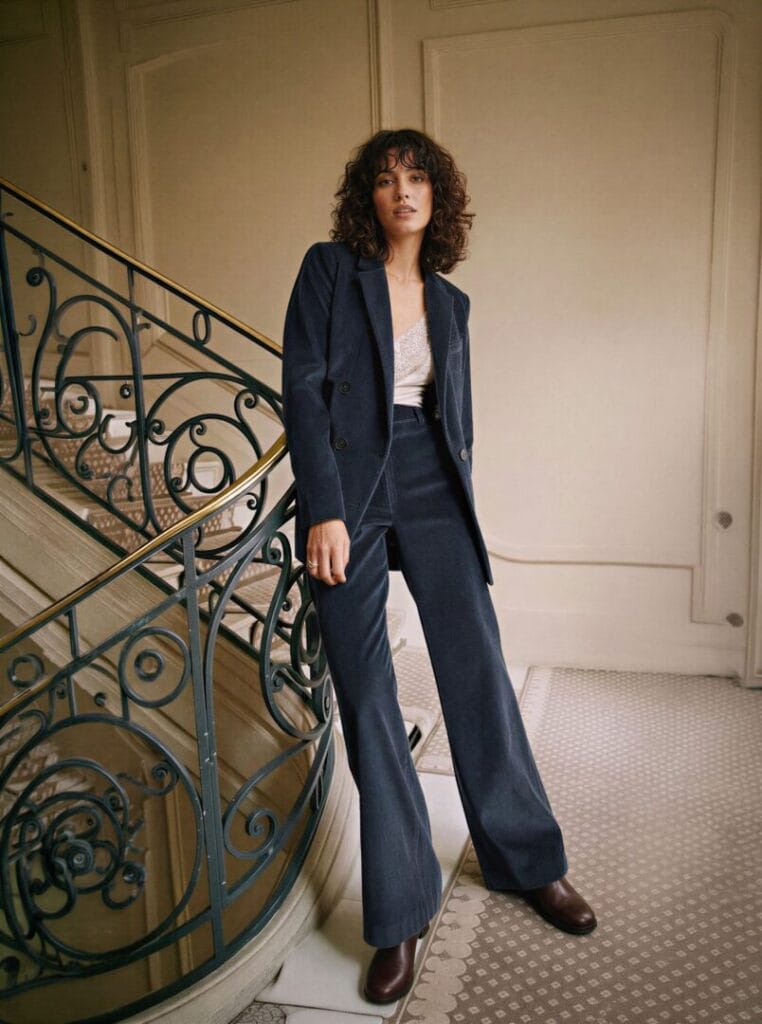
From double-breasted elephant-leg suits to streamlined pencil silhouettes, the cuts emphasize shape and proportion rather than bulk.
Versatile Styling
The brand positions corduroy across both formal and relaxed categories—blazers, pants, skirts, and Bermuda shorts—expanding its wardrobe relevance.
Contemporary Color Direction
While earthy tones remain present, the palette extends into richer, more fashion-forward shades that appeal to younger consumers.
Precision Fit Through Customization
By leveraging made-to-measure technology, Sumissura eliminates one of corduroy’s historic weaknesses: poor fit. Garments are built to the customer’s exact measurements, dramatically improving wearability.
Texture as a Statement
The styling approach—often pairing corduroy blazers with scarves or bandanas—underscores the fabric’s visual character while keeping the look modern and relaxed.
Product Highlights That Signal the Shift
Several pieces in the current offering illustrate how far corduroy has evolved.
The double-breasted elephant-leg suit demonstrates the fabric’s new fluidity. Where older corduroy tailoring might have felt rigid, this silhouette embraces movement and fashion proportion.
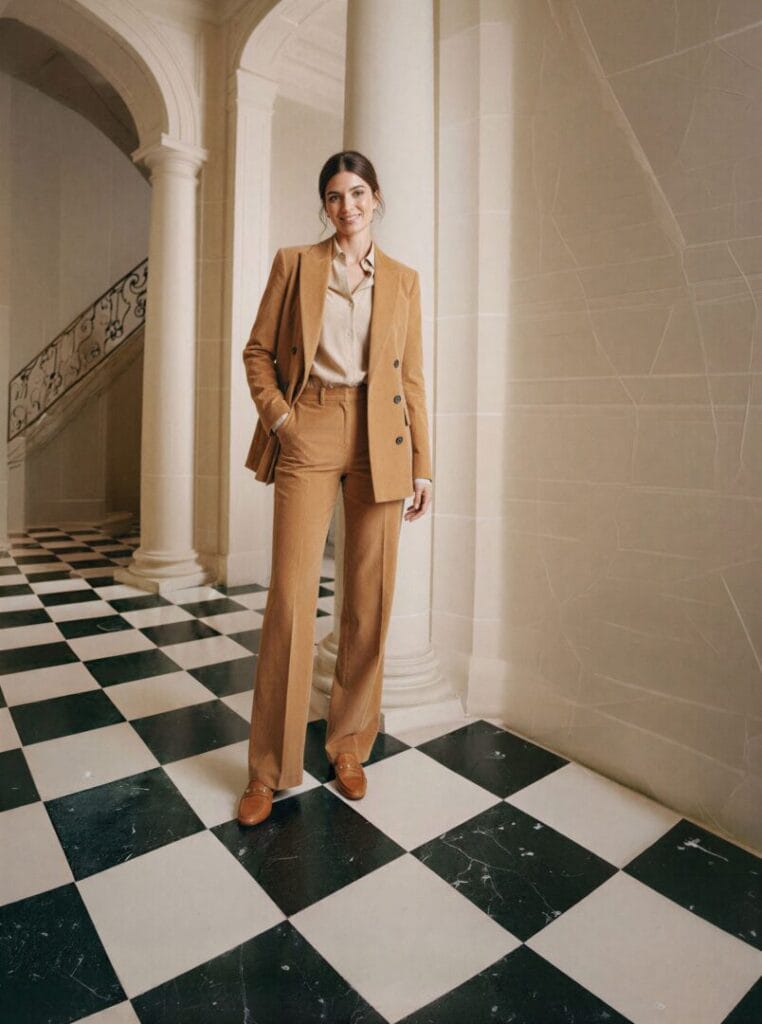
The straight-cut green corduroy suit shows how refined wale construction can produce a clean, contemporary line suitable for both professional and social settings.
Meanwhile, the corduroy blazer emerges as the collection’s key wardrobe anchor—structured enough for polish yet soft enough for everyday wear. Styled with a neck scarf, it reflects the modern consumer’s appetite for relaxed sophistication.
Even more telling is the brand’s inclusion of corduroy Bermuda shorts, signaling confidence that the fabric can now function beyond cold-weather categories.
The Consumer Opportunity
From a market perspective, corduroy’s revival is not merely aesthetic—it is strategic.
Younger consumers are increasingly drawn to fabrics that offer heritage credibility with modern performance. Corduroy now checks both boxes.
At the same time, the rise of remote and hybrid work has blurred the line between formal and casual dressing. Corduroy’s natural versatility makes it well suited to this new wardrobe reality.
Sumissura’s made-to-measure model further strengthens the proposition by addressing the fit anxiety that often prevents customers from experimenting with textured fabrics.
The Road Ahead
If current momentum continues, corduroy is poised to become one of the most commercially relevant heritage fabrics of the late 2020s. The key will be maintaining the balance between tradition and innovation.
Brands that succeed will be those that treat corduroy not as a nostalgic throwback but as a technically evolving materialcapable of meeting modern performance and style expectations.
Sumissura’s approach suggests a clear understanding of this dynamic. By combining digital customization with updated textile engineering, the company is helping reposition corduroy for a new generation of consumers who demand both individuality and polish.
Final Word
Corduroy’s return in 2026 is not a simple trend cycle—it is a structural upgrade. What was once heavy, boxy, and seasonally limited has been reborn as a flexible, flattering, and highly customizable fabric.
In the era of Corduroy 5.0, texture is power, fit is non-negotiable, and personalization is the new luxury. Brands like Sumissura are proving that when heritage fabrics are reimagined through a modern lens, they don’t just come back—they come back stronger.
And this time, corduroy isn’t asking for permission. It’s taking the stage.
Save Article