
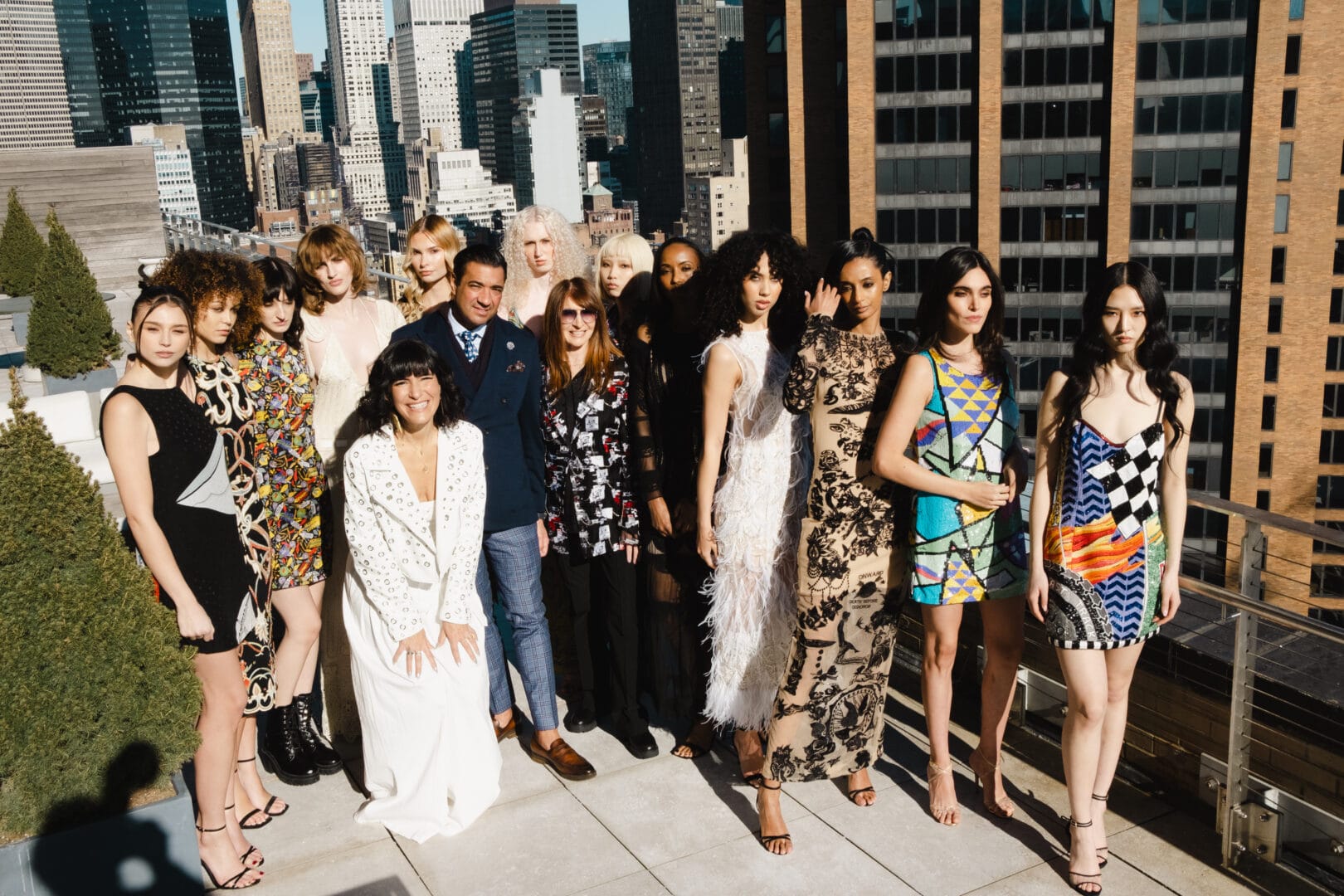
There are moments in fashion when you feel the shift happening in real time.
Last week in New York City, my StyleLujo.com team and I experienced exactly that at Fashion Forward Week’s second edition, held February 2–6 at 2 Park Avenue—Midtown’s iconic Art Deco tower reimagined for the modern creative economy. What unfolded over four days wasn’t simply a runway schedule. It wasn’t just showroom appointments. And it certainly wasn’t a traditional trade fair.
It was something far more important: a blueprint for how fashion trade events must evolve to survive—and thrive—in the age of technology, transparency, and artificial intelligence.
And if you understand the history of American trade fairs, you know just how significant that is.
Why Trade Fairs Have Always Been the Backbone of Fashion
Long before Instagram launches and digital drops, the American fashion industry was built on trade fairs.
In the early 20th century, garment manufacturers gathered in centralized markets like New York’s Garment District to show collections to department store buyers. By the 1930s and 1940s, structured trade events began formalizing these exchanges. After World War II, shows such as the National Association of Women’s Wear (NAWW) markets and later MAGIC in Las Vegas (launched in 1933 as the Men’s Apparel Guild in California) became the commercial engines of the industry.
Trade fairs were never about glamour. They were about survival.
They connected:
- Designers to retailers
- Manufacturers to buyers
- Suppliers to brands
- Press to product
They drove orders. They created wholesale calendars. They established fashion as an ecosystem—not just an art form.
By the 1990s and early 2000s, American trade fairs exploded into mega-events. MAGIC Las Vegas, Coterie New York, Project, ENK, and Capsule became essential seasonal destinations. Buyers flew in, wrote orders on the spot, and filled department stores for the upcoming season.
But then came disruption.
The Digital Disruption That Changed Everything
E-commerce redefined retail.
Direct-to-consumer brands bypassed wholesale.
Social media turned influencers into sales channels.
And then Covid-19 shut down in-person trade events entirely.
The traditional trade fair model—rows of booths in convention centers—suddenly felt outdated.
Brands began asking:
Do we need wholesale?
Do we need physical markets?
Can digital showrooms replace trade floors?
The answer, as we now see in 2026, is more nuanced.
Trade fairs aren’t dying.
They are transforming.
And Fashion Forward Week is proof.
What We Witnessed at Fashion Forward Week
Walking into 2 Park Avenue, my team immediately sensed that this wasn’t a standard market floor. The space felt curated, intentional, immersive.
Founded by Jordana Guimaraes and Christopher Hunt, Fashion Forward Week positioned itself under one clear message: Fashion Is for Everyone.
But what struck us most was how that inclusivity extended beyond diversity optics. It included:
- Emerging designers
- Legacy brands
- Supply chain technology platforms
- AR innovators
- Artists
- Philanthropic organizations
- Press and buyers in shared proximity
This is the hybrid trade fair model in action.
Not just runway.
Not just showroom.
Not just tech conference.
But a convergence.
Exclusive Interview | StyleLujo.com
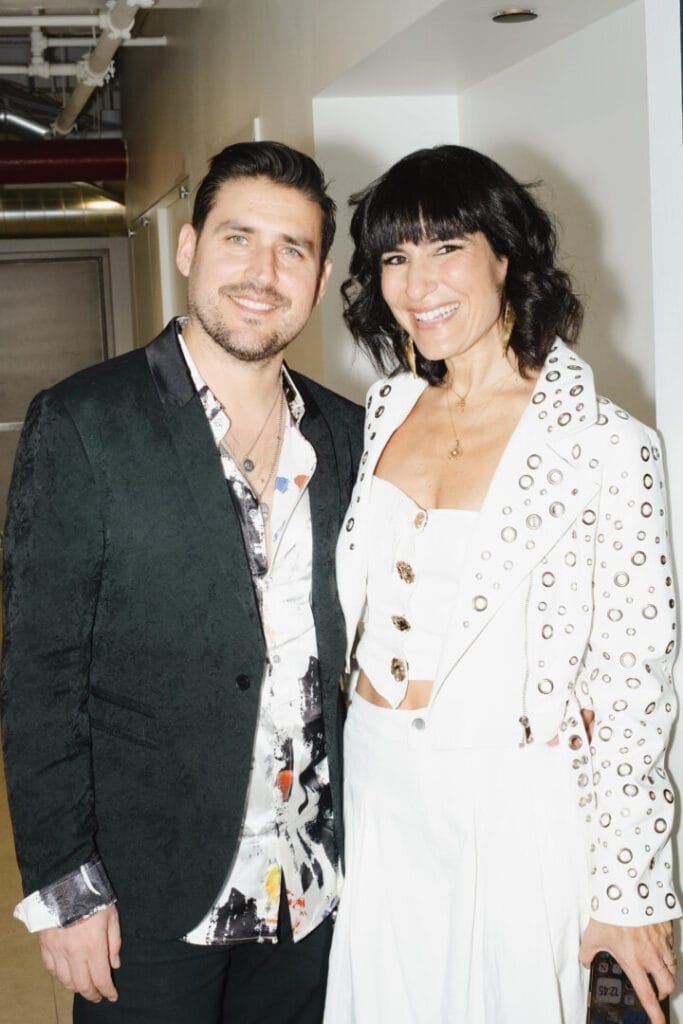
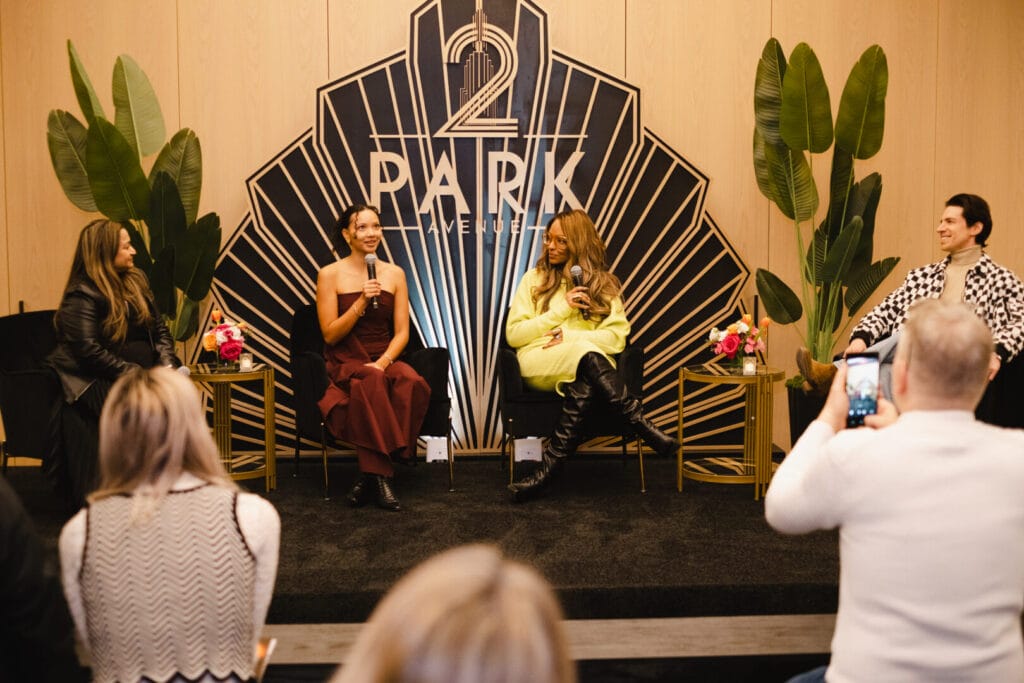
As the fashion industry continues to redefine itself through inclusivity, sustainability, and innovation, Fashion Forward has emerged as one of the most talked-about platforms of the new guard. What began as Fashion Forward Week in September 2025 has rapidly evolved beyond the traditional runway model, positioning itself as a movement designed to unite legacy houses, emerging talent, technologists, artists, and consumers under one powerful ethos: Fashion Is for Everyone. In this exclusive StyleLujo.com interview, Editor-at-Large Joseph DeAcetis speaks with founders Jordana Guimaraes and Christopher Hunt about their vision, their pivot beyond the “week” format, and what’s next for this dynamic platform reshaping the industry conversation.
Joseph DeAcetis: Fashion Forward Week has quickly positioned itself as more than a traditional fashion event. What inspired you to create FFW, and what gap in the industry were you determined to address from the very beginning?
Jordana Guimaraes & Christopher Hunt: When we launched Fashion Forward Week in September 2025, our mission was clear: to create meaningful visibility for emerging and scale-up brands by presenting them alongside established legacy houses. We wanted to unify the industry under one inclusive umbrella—true to our slogan, Fashion Is for Everyone.
After producing our second edition, we recognized there were still key elements needed to make the platform fully sustainable—not only for the designers participating, but for us as founders building a scalable business. That realization led to an important evolution. We’ve officially dropped the word “Week” and are now focused on building a broader platform: Fashion Forward. This pivot allows us to think bigger, more strategically, and more globally. Stay tuned—there’s much more to come.
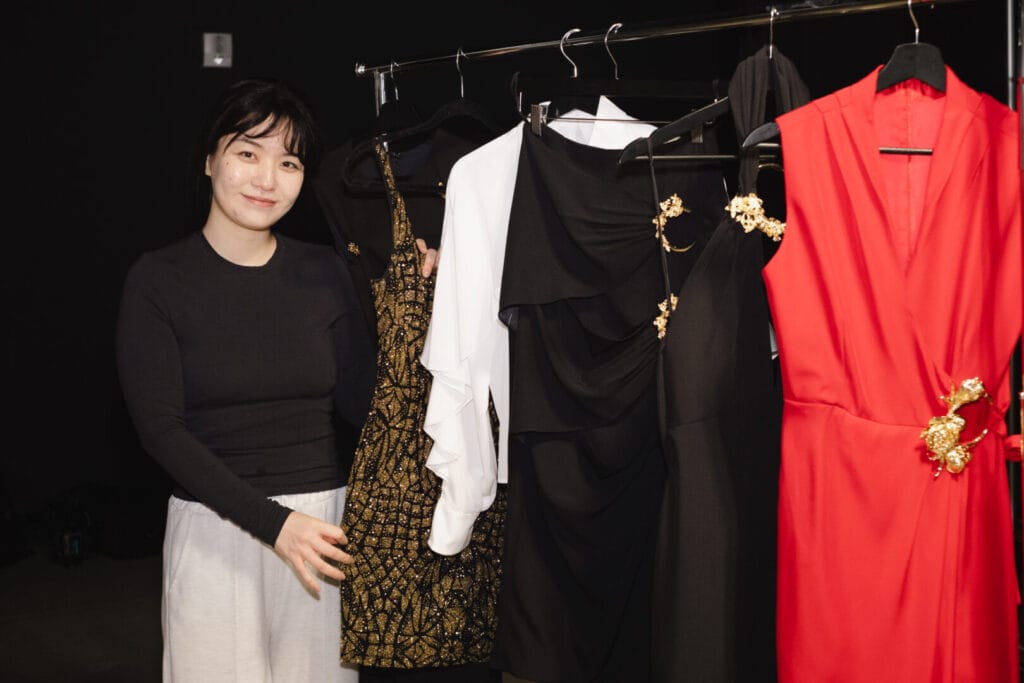
Joseph DeAcetis: “Fashion Is for Everyone” is your core message. How do you personally define inclusivity in fashion today, and how does Fashion Forward bring that philosophy to life?
Jordana Guimaraes & Christopher Hunt: Inclusivity extends far beyond race, size, or gender. It means ensuring that everyone has a seat at the table—emerging designers, established brands, supply chain innovators, artists, technologists, and consumers.
At Fashion Forward, we present brands on equal footing, regardless of scale. By doing so, we foster dialogue, opportunity, and collaboration across every level of the industry.
Joseph DeAcetis: This season featured both legacy designers and emerging talent. Why was it important to place these brands side by side?
Jordana Guimaraes: Legacy brands bring recognition, credibility, and historical context that elevate newer names. At the same time, emerging designers bring fresh energy, innovation, and collaborative spirit that inspire larger houses. Showing them together creates a symbiotic relationship—one that benefits the entire ecosystem.
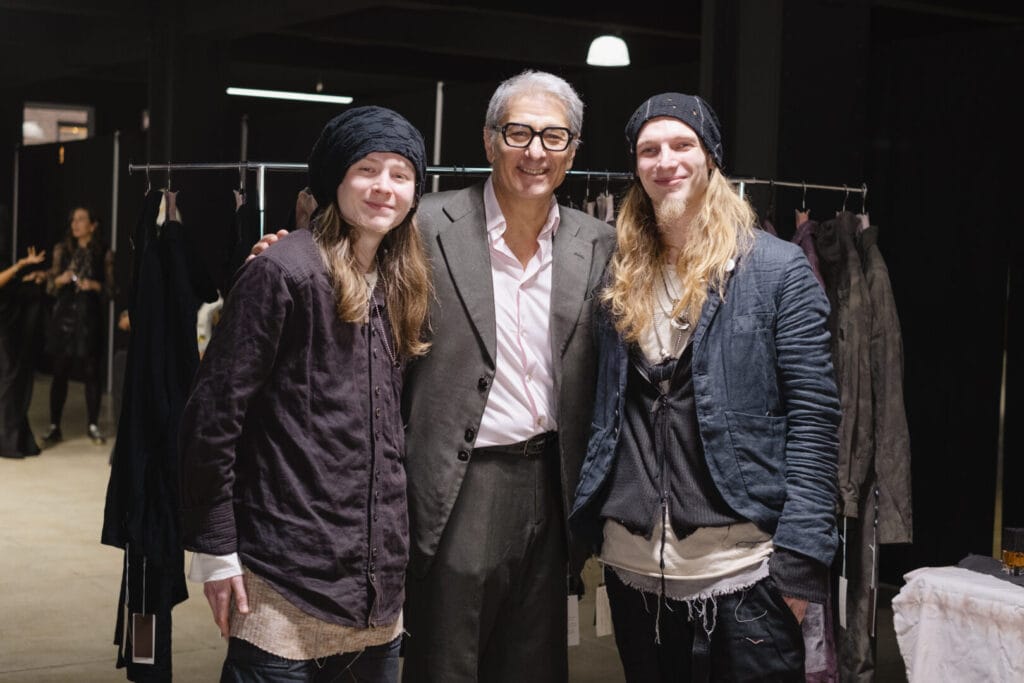
Joseph DeAcetis: The Nicole Miller archive show was a standout moment. What did it symbolize?
Jordana Guimaraes & Christopher Hunt: The archive presentation embodied what fashion truly represents: heritage and innovation working together. You cannot have innovation without understanding history, and you cannot honor history without reinterpreting it for today.
The archive concept also signaled our evolution. It reflects the direction Fashion Forward is moving toward—one that honors legacy while expanding into a more comprehensive, forward-thinking platform.
Joseph DeAcetis: Technology played a significant role this season, particularly through AR and supply chain platforms. How do you see technology shaping the future of fashion weeks?
Jordana Guimaraes: Technology amplifies creativity—it doesn’t replace it. We see it as an assistant to designers and storytellers. AR, for example, allows consumers to virtually experience garments without necessarily purchasing them immediately, which supports both engagement and sustainability. Technology will continue to reshape how brands communicate, present collections, and connect with global audiences.
Joseph DeAcetis: Sustainability and purpose-driven brands were strongly represented. How do you curate participants?
Christopher Hunt: Sustainability and storytelling are central to our ethos. Sustainability can take many forms—from responsible production to circular concepts like archival showcases. The Nicole Miller archive itself was a sustainable statement, reinforcing that not every season requires new production.
As Creative Director, my background in art and music informs the curation process. We select designers who align with our values and who bring authenticity, narrative depth, and forward-thinking ideas to the platform.
Joseph DeAcetis: Live art and philanthropy were central to this year’s programming. Why was charitable impact important?
Jordana Guimaraes: True entrepreneurship includes giving back. Mental health, particularly within the creative industries, is a conversation that must continue. Collaborating with artists like Jason Naylor and Mira—whose work radiates positivity and light—aligned naturally with that mission. Jason’s You Are Not Alone initiative beautifully reinforces the importance of community and emotional support within fashion.
Joseph DeAcetis: Fashion Forward has been described as a movement rather than an event. What does long-term success look like?
Jordana Guimaraes & Christopher Hunt: Long-term success means building a scalable, collaborative platform that unites legacy brands, emerging designers, sustainability initiatives, and direct consumer engagement. Following our second edition and the archive show, we’ve refined our vision for what Fashion Forward will become. While we can’t reveal everything just yet, we can say that collaboration and innovation will be at the core.
Joseph DeAcetis: What challenges did you face launching the platform, and what advice would you give to other creatives?
Jordana Guimaraes & Christopher Hunt: The real challenge isn’t launching—it’s executing and knowing when and how to pivot to scale effectively. Our advice to creatives is simple: surround yourself with the right mentors and industry allies. Strategic guidance can be transformative and often determines long-term success.
Joseph DeAcetis: Looking ahead, what excites you most—and what can the industry learn from your model?
Jordana Guimaraes & Christopher Hunt: What excites us most is the continued integration of established and emerging brands in true collaboration. The industry can learn two essential lessons: leave ego at the door, and recognize that collaboration is the future. Major players can learn just as much from emerging talent as emerging designers can learn from legacy houses.
At its core, Fashion Forward stands firmly by its message—Fashion Is for Everyone.
The Nicole Miller Archive: Where History Meets AR
The headline moment of the week was Nicole Miller’s archive presentation—an extraordinary retrospective spanning decades of American fashion.
Archive shows are powerful on their own. They remind the industry that innovation doesn’t exist without history.
But what elevated this moment into the future was Perfect Corp’s augmented reality integration. Guests could virtually try on archive looks using AR technology—bridging heritage with digital experimentation.
This is where AI and immersive technology enter the trade fair conversation.
AI-powered visualization tools now allow:
- Virtual try-ons
- Demand forecasting
- Inventory optimization
- Predictive buying behavior analysis
According to McKinsey’s State of Fashion reports in recent years, AI adoption in fashion has accelerated dramatically, with brands leveraging machine learning for trend forecasting and supply chain efficiencies. Hybrid events like Fashion Forward are integrating these technologies directly into physical spaces.
The result?
Trade fairs become interactive laboratories.
The Rise of the Hybrid Model
Historically, trade fairs were transactional.
You showed.
You sold.
You left.
Today’s hybrid trade model is experiential, digital, and data-driven.
At Fashion Forward Week, we saw:
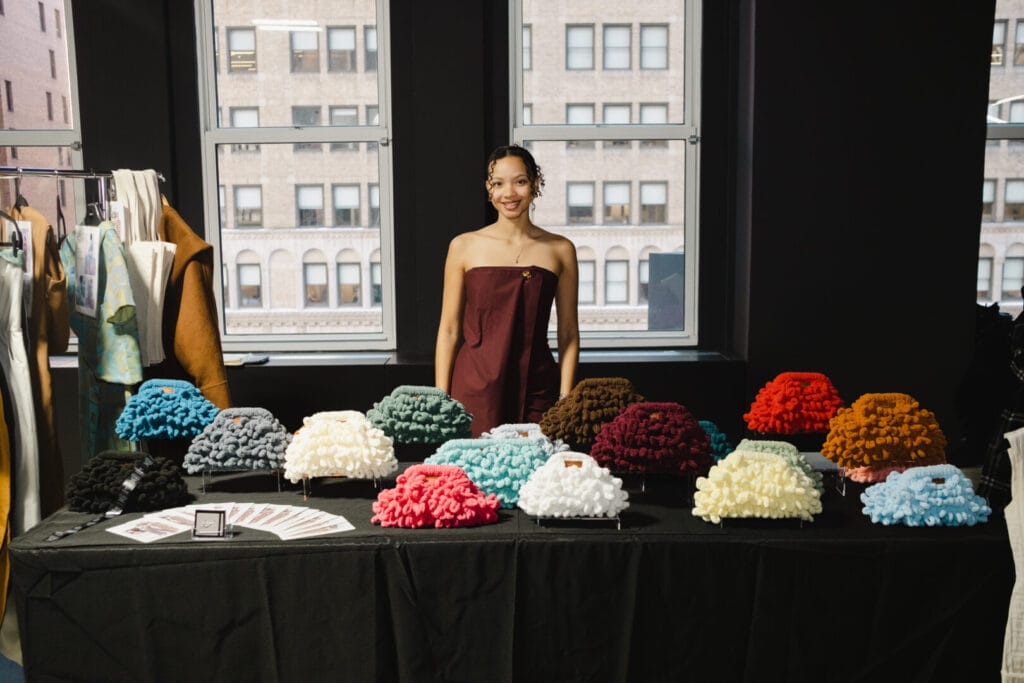
SDN Brooklyn redefining upcycling as wearable art.
RELEVE, founded by Emily Burnett, integrating social technology into couture.
Richard Alexander Cooke showcasing sustainability through raw dyes and one-of-a-kind production.
Leatheracci presenting elevated craftsmanship with edge.
Rebel Roots bridging Western and Indian cultural narratives.
Intuition Kicks, pairing Italian sneakers with Tarot-driven storytelling.
These aren’t brands relying solely on wholesale orders. They are building communities.
Hybrid trade fairs amplify that community-building by combining:
- Physical presence
- Livestream visibility
- Social amplification
- AR and tech integration
- Philanthropic storytelling
In other words, trade fairs are becoming content engines.
Why AI Is the Next Trade Fair Frontier
Artificial intelligence is quietly redefining how trade events function.
AI tools are now being used for:
- Buyer matchmaking algorithms
- Predictive analytics on trending SKUs
- Automated appointment scheduling
- Digital showroom personalization
- Chat-driven wholesale portals
Supply chain platform PATCHWORK, featured at Fashion Forward Week, emphasized how transparency and efficiency are becoming non-negotiable in modern fashion commerce. AI-enabled supply chains reduce waste, optimize production timelines, and enhance traceability.
In a world where sustainability is no longer optional, AI becomes a commercial advantage.
Trade fairs that integrate AI-driven tools will outperform those that don’t.
The Emotional Economy of Trade
Another powerful shift we witnessed was the integration of art and mental health advocacy.
Live painting performances by Jason Naylor and Mira were auctioned to benefit The Mental Health Coalition, founded by Kenneth Cole.
This matters.
Historically, trade fairs were emotionally neutral spaces. Pure commerce.
Now, they are cultural stages.
The modern buyer—especially Gen Z and Millennial decision-makers—cares about:
- Purpose
- Values
- Impact
- Transparency
Hybrid trade fairs amplify storytelling alongside product.
That storytelling drives loyalty.
And loyalty drives sales.
Why Trade Fairs Still Matter in 2026
Some predicted wholesale would disappear.
It hasn’t.
Instead, it has evolved.
Retailers still need discovery platforms.
Designers still need exposure.
Press still needs curated access.
But the expectations have changed.
Trade fairs must now provide:
- Data integration
- Technology demonstration
- Sustainability narratives
- Consumer-facing amplification
- Cross-industry collaboration
Fashion Forward’s decision to drop the word “Week” and reposition as a broader platform signals this evolution.
The future isn’t about a calendar slot.
It’s about a scalable ecosystem.
The Historical Arc: From Convention Halls to Connected Platforms
Let’s step back.
1930s–1980s:
Trade fairs built wholesale America.
1990s–2000s:
Mega expos dominated seasonal buying cycles.
2010s:
Digital disruption fractured the model.
2020–2022:
Pandemic collapse forced reinvention.
2023–2026:
Hybrid platforms emerge—combining physical presence with AI, AR, and digital scalability.
We are now entering the era of intelligent trade ecosystems.
And events like Fashion Forward Week are early adopters.
Our Take at StyleLujo.com
What resonated most with my team was not just the lineup of designers or the AR innovation.
It was the energy of collaboration.
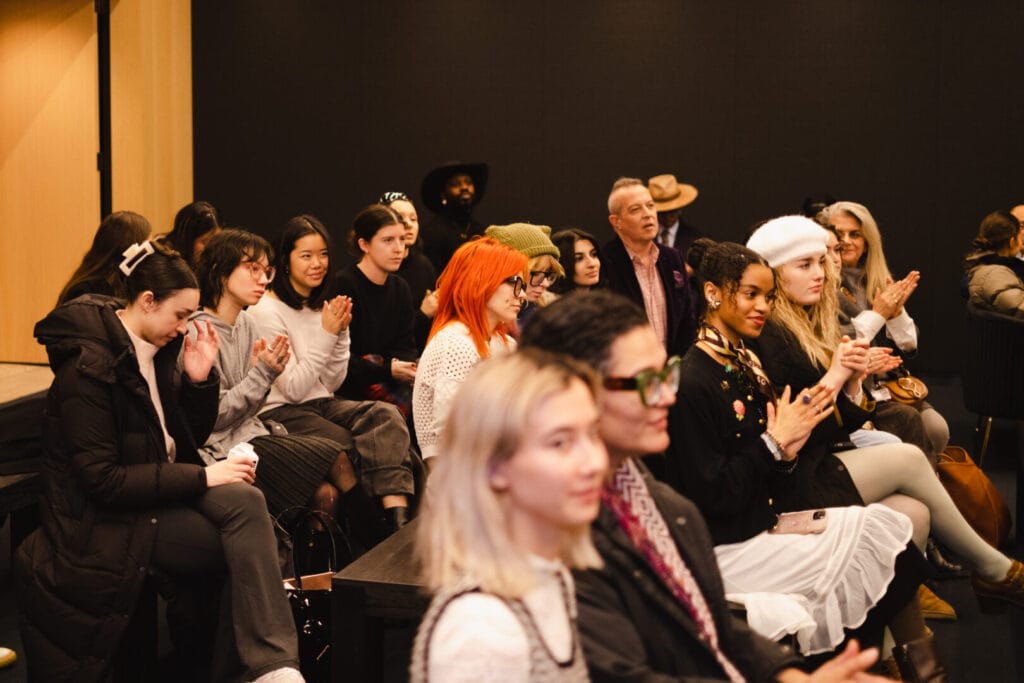
Legacy brands sharing space with emerging labels.
Technology platforms speaking directly to creatives.
Artists raising awareness for mental health within a commercial environment.
Trade fairs are no longer just about transactions.
They are about translation—translating creativity into commerce in a way that feels authentic to modern consumers.
The Road Ahead
If trade fairs fail to embrace AI, immersive tech, and hybrid visibility, they will fade.
If they cling to rigid booth models without storytelling or digital integration, they will lose relevance.
But if they:
- Integrate predictive AI tools
- Facilitate direct-to-consumer amplification
- Support sustainable supply chain transparency
- Create experiential programming
- Champion collaboration over ego
They will become stronger than ever.
Fashion Forward Week demonstrated that the industry doesn’t need fewer trade platforms.
It needs smarter ones.
As the lights dimmed at 2 Park Avenue and we reviewed Joshua Sims’ images—each capturing designers, innovation, and momentum—we realized we weren’t just covering an event.
We were documenting a turning point.
Trade fairs built American fashion.
Hybrid, AI-integrated platforms will define its future.
And if Fashion Forward is any indication, that future is already here.
Save Article